In the digital age, communication has become faster, shorter, and more informal than ever before. People now rely heavily on abbreviations, acronyms, and slang to save time and keep conversations flowing smoothly.
One of the most commonly searched and widely used abbreviations is WBU, especially in texting and social media.
If you’ve ever received a message like “I’m good, wbu?” and wondered what it really means, you’re not alone. Millions of people search for the wbu meaning in text every year because they want to understand modern texting language and avoid awkward misunderstandings.
WBU is more than just a shortcut, it’s a social signal. It shows interest, keeps conversations balanced, and helps people connect more naturally. Whether you’re chatting with friends, talking to someone on a dating app, or networking online, knowing how and when to use WBU can improve your communication skills.
This in-depth guide will explore everything about WBU: its meaning, background, usage across platforms, misconceptions, alternatives, professional relevance, and even its (limited) technical meanings.
By the end, you’ll have a complete understanding of how WBU fits into today’s digital language.
Meaning & Definition of WBU in Text
The most common and universally accepted meaning of WBU in text is:
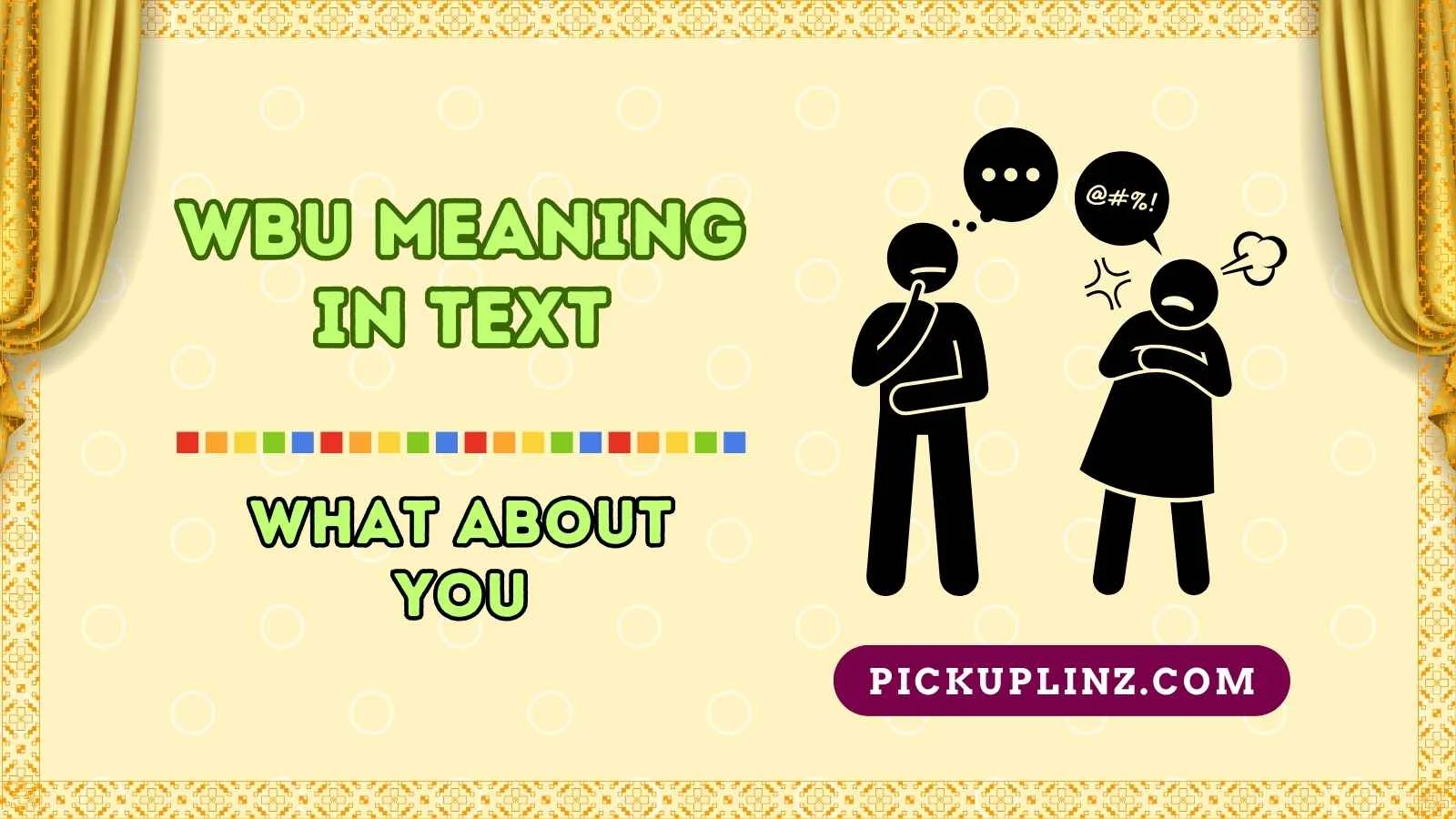
WBU = “What about you?”
It is a conversational abbreviation used to return a question back to the other person. After you answer something, you use WBU to invite the other person to share their own thoughts, feelings, or situation.
Simple Examples
- “I’m doing great, wbu?”
- “I love pizza. Wbu?”
- “Just got home, wbu?”
In all of these cases, WBU acts as a conversational bridge. It keeps the discussion two-sided and shows that you care about the other person’s response.
Linguistic Purpose of WBU
From a language perspective, WBU is an example of initialism-based shorthand, where the first letters of a phrase are used to create a shorter version. This is similar to:
- LOL = Laugh Out Loud
- BRB = Be Right Back
- TTYL = Talk To You Later
WBU fits perfectly into this pattern. It’s short, easy to type, and easy to understand for people familiar with texting culture.
Tone and Emotional Meaning
Although WBU literally means “what about you,” it can also carry emotional and social meaning:
- Friendly – Showing interest in someone
- Casual – Keeping the tone light and relaxed
- Polite – Returning a question so it’s not one-sided
- Flirty (sometimes) – In dating chats, it can signal curiosity and engagement
So while the definition is simple, its impact on conversation is powerful.
Background: How WBU Became Popular
The rise of WBU is closely linked to the history of mobile texting and internet chat culture. In the early days of SMS, users were limited to a small number of characters per message. This encouraged people to shorten words and phrases as much as possible.
Key Factors Behind WBU’s Popularity
- Character limits in early SMS
- Slow typing on old mobile keypads
- Chat room culture (MSN, Yahoo, AIM)
- Rise of smartphones and instant messaging apps
As digital communication evolved, these shortcuts became habits. Even though modern phones no longer have strict character limits, people continue to use abbreviations because they feel natural and efficient.
Generational Influence
Younger users, especially teenagers and young adults, played a major role in spreading texting slang. Platforms like:
- MSN Messenger
- Facebook Messenger
- Snapchat
- Instagram DMs
helped normalize terms like WBU. Over time, these abbreviations crossed age groups and became part of everyday digital language.
Today, WBU is no longer just a shortcut—it’s a cultural marker of informal online communication.
Usage in Different Contexts: Chat, Social Media, and Professional Fields
Casual Chat
In everyday texting with friends and family, WBU is extremely common. It’s used to keep conversations flowing naturally.
Examples:
- “I’m watching Netflix, wbu?”
- “Just finished work, wbu?”
In casual settings, WBU feels normal and friendly.
Social Media Platforms
On platforms like Instagram, Snapchat, Facebook, and TikTok, WBU is used in:
- Comments
- Direct messages
- Story replies
- Quick interactions
Because these platforms encourage short and fast communication, WBU fits perfectly.
Professional and Workplace Communication
In professional environments, WBU is not recommended in most cases. Using texting slang in emails or formal messages can appear unprofessional. Instead, people usually write:
- “What about you?”
- “And how about your situation?”
However, in modern workplaces that use tools like Slack or Teams, some teams allow casual language. Even then, it’s important to match the company culture.
Comparison Table: Casual vs Professional
| Context | WBU Appropriate? | Recommended Alternative |
|---|---|---|
| Friends & Family | ✅ Yes | WBU |
| Dating Apps | ✅ Yes | WBU / HBU |
| Social Media DMs | ✅ Yes | WBU |
| Work Chat (Slack) | ⚠️ Sometimes | What about you? |
| Business Email | ❌ No | What about you? / And you? |
| Formal Letters | ❌ No | Full sentence phrasing |
Meaning in Chat, WhatsApp, Instagram, and TikTok
On WhatsApp, WBU is one of the most common abbreviations. People use it in daily conversations to:
- Show interest
- Keep replies short
- Maintain casual tone
Examples:
- “Busy day today, wbu?”
- “At home chilling, wbu?”
On Instagram, WBU is often used in:
- Story replies
- DMs
- Comment interactions
It helps people quickly engage without typing long messages.
TikTok
On TikTok, WBU appears in comments and private messages. Since TikTok is built around short content, users also prefer short text. WBU allows fast interaction and keeps conversations moving.
Across all these platforms, the meaning stays the same, but the tone can vary from friendly to flirty to simply polite.
Meaning in Physics, Medical, and Aircraft Terminology
One important thing to understand is that WBU is not a standard abbreviation in most technical or scientific fields.
Physics
In physics, WBU is not recognized as a universal abbreviation. Any use would be:
- Internal to a specific lab
- Part of a custom variable system
- Not standardized
Medical Field
In medicine, WBU is also not a common or official abbreviation. Medical professionals rely on strict, standardized acronyms to avoid confusion. Using WBU in a medical context could be unsafe or unclear.
Aircraft and Aviation
In aviation, communication must be extremely precise. WBU is not a recognized aviation abbreviation. Pilots, air traffic controllers, and maintenance crews use standardized terminology approved by international aviation authorities.
Key Takeaway
If you see WBU in a technical or professional document, it is likely:
- Informal
- Internal
- Not officially recognized
In most cases, WBU belongs to casual digital communication, not technical fields.
Common Misconceptions About WBU
Misconception: WBU Has Multiple Meanings
In everyday texting, WBU almost always means “what about you.” People sometimes assume it has secret or alternative meanings, but this is rarely true.
Misconception: Using WBU Is Lazy or Rude
Some people think abbreviations are lazy. In reality, WBU is a normal part of modern communication. It’s not rude in casual settings—it’s efficient.
Misconception: Texting Slang Ruins Language Skills
Research and observation show that people can switch between informal and formal writing styles. Using WBU in texts does not mean someone can’t write properly in professional or academic settings.
Misconception: WBU Is Only for Teenagers
While younger users popularized it, WBU is now used by people of many age groups. It has become part of mainstream digital language.
Similar Terms & Alternatives to WBU
There are several alternatives that mean the same or something very similar.
Common Alternatives
- HBU – How about you?
- U? – You?
- And you? – Slightly more formal
- What about yourself? – Very formal and less common
Tone Comparison Table
| Term | Formality Level | Common Usage |
|---|---|---|
| WBU | Very informal | Texting, social media |
| HBU | Very informal | Texting, chats |
| U? | Extremely casual | Quick replies |
| And you? | Neutral | Casual + semi-formal |
| What about you? | Neutral-formal | Work + casual |
| What about yourself? | Formal | Rare in texting |
Choosing the right option depends on who you’re talking to and how formal you want to sound.
How to Respond to WBU Correctly
Responding to WBU is simple. You just answer the implied question about yourself.
Simple Responses
- “I’m doing well, thanks!”
- “Just relaxing.”
- “Busy with work.”
Better Responses (to keep conversation going)
- “I’m good! Just finished a workout. What are you up to?”
- “Not bad, just watching a movie. Any recommendations?”
Adding detail makes the conversation more engaging and shows genuine interest.
Differences Between WBU and Similar Words
While WBU and HBU are very close, there are small differences in usage and tone.
WBU vs HBU
- WBU (What about you?) – Broad, can refer to anything
- HBU (How about you?) – Slightly more focused on feelings or situations
WBU vs “And you?”
“And you?” is more neutral and works better in spoken English and semi-formal writing.
Why These Differences Matter
Understanding these subtle differences helps you choose the right expression for the right situation, improving clarity and tone.
Relevance in Online Conversations & Dating Apps
On dating apps like Tinder, Bumble, and others, WBU is extremely common. It helps:
- Keep conversations balanced
- Show interest
- Encourage the other person to talk about themselves
Dating App Examples
- “I love traveling, wbu?”
- “I’m into fitness and music, wbu?”
Psychological Role in Dating Chats
Using WBU shows:
- Curiosity
- Engagement
- Willingness to listen
However, overusing WBU without adding meaningful content can make conversations feel shallow. The best approach is to mix WBU with thoughtful replies and follow-up questions.
Real Life Case Studies of WBU Usage
Case Study 1: Friend-to-Friend Chat
Message: “I’m bored, wbu?”
Result: Conversation continues with shared activity ideas.
Impact: Keeps friendship communication flowing.
Case Study 2: Workplace Slack Chat
Message: “Busy today, wbu?”
Result: Acceptable in casual teams, but not ideal in formal environments.
Impact: Tone depends on company culture.
Case Study 3: Dating App
Message: “I love hiking, wbu?”
Result: Encourages personal sharing and deeper conversation.
Impact: Helps build connection.
Facts About WBU in Digital Communication
- WBU is one of the most common texting abbreviations worldwide.
- It is primarily used in informal digital settings.
- It helps maintain conversational balance.
- It is rarely used in professional or technical writing.
- It has remained popular for over a decade.
Expert Quote on Digital Slang
“Texting abbreviations like WBU reflect how language adapts to technology. They are not errors—they are innovations.”
— Digital Communication Researcher
This highlights that WBU is not a mistake, but a natural evolution of language.
FAQs
What does WBU mean in texting?
WBU means “what about you?” and is used to return a question to the other person.
Is WBU rude to use?
No, it’s not rude in casual conversations, but it may be inappropriate in formal settings.
Can I use WBU in work emails?
It’s better to avoid it and use the full phrase “what about you” in professional emails.
Is WBU the same as HBU?
They are very similar. HBU means “how about you,” while WBU means “what about you.”
Is WBU used on dating apps?
Yes, it’s very common and helps keep conversations engaging and balanced.
Conclusion: Why Understanding WBU Matters
Understanding the wbu meaning in text is essential for anyone who communicates online. While it may seem like a small abbreviation, it plays a big role in shaping how conversations flow.
WBU helps people stay engaged, shows interest in others, and reflects the casual, fast-paced nature of modern digital communication.
Knowing when to use WBU, and when to avoid it, can improve both your personal and professional interactions.
In casual chats, it feels natural and friendly. In formal settings, switching to full phrases shows professionalism and clarity.
As language continues to evolve alongside technology, abbreviations like WBU will remain a key part of how people connect. By understanding its meaning, usage, and context, you can communicate more confidently and effectively in today’s digital world.

Hi, I’m Ben Mark, the creator behind Pickuplinz.com.
I’ve always believed words have power especially the kind that make people smile, blush, or laugh out loud. That’s what inspired me to build Pickuplinz, a place where fun, charm, and creativity come together through clever pickup lines and playful word magic.
I enjoy turning simple phrases into something memorable. Whether it’s smooth, funny, cheesy, or bold, my goal is to help people break the ice, spark conversations, and add a little confidence to their social game.
When I’m not working on new content, I’m exploring trends, humor styles, and creative ways people connect through words online.
Thanks for being here let’s keep the vibes fun and the lines smooth.