Many people search for the STFU meaning in text because they’ve seen it used in chats, social media posts, or even dating apps, and weren’t sure whether it was meant as a joke or an insult.
The confusion around STFU comes from its strong wording combined with its flexible usage. In one situation, it can sound aggressive and offensive.
In another, it may come across as playful sarcasm between friends. Without facial expressions or vocal tone, digital communication makes interpretation tricky.
This is exactly why understanding the real meaning, background, context, and proper response to STFU is so important.
Meaning & Definition of STFU in Text
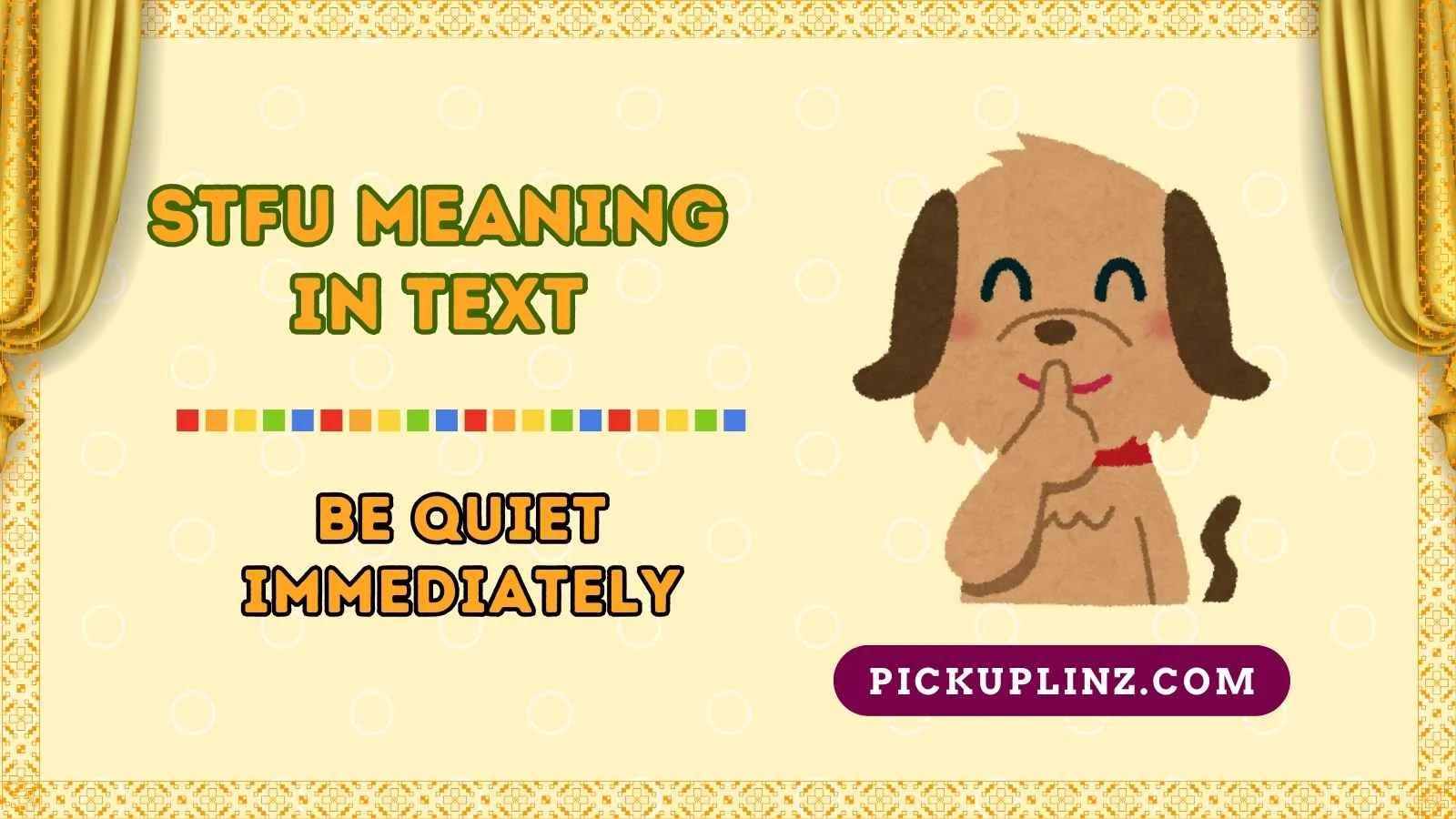
The STFU meaning in text is simple but powerful.
STFU stands for “Shut The F* Up.”**
It is an acronym that tells someone to stop talking. Because it includes profanity, it is considered explicit, rude, and confrontational in its literal sense.
However, digital communication has softened its meaning in some situations.
Core Meaning
At its core, STFU means:
- Stop talking
- Be quiet immediately
- Your words are unwanted
How Meaning Changes With Context
In texting and online conversations, STFU can take on different tones:
- Aggressive: Used to insult or silence someone
- Sarcastic: Expressing disbelief or shock
- Playful: Friendly teasing between close friends
- Emotional: Reacting strongly to surprising news
Quote:
“In digital language, meaning doesn’t live in words alone—it lives in context.”
Important Note
Even when used jokingly, STFU still carries a harsh edge. Not everyone is comfortable with profanity, which is why its use can easily backfire.
Background and Origin of STFU
Understanding the background of STFU helps explain why it’s both popular and controversial.
Early Origins
- The phrase “shut up” has existed in spoken English for centuries.
- Adding profanity intensified the phrase for emotional impact.
- STFU emerged as a written shortcut in early internet forums and chat rooms.
Rise in Internet Culture
STFU became popular due to:
- Online anonymity
- Fast-paced conversations
- Gaming and forum culture
- Meme-based humor
As texting and instant messaging became mainstream, STFU transitioned from forums into everyday digital language.
Cultural Evolution
Over time:
- Younger users began using STFU humorously.
- Meme culture reduced its shock value in some circles.
- Professional and older audiences continued to see it as offensive.
This split perception explains why STFU can feel normal to one person and deeply rude to another.
Usage in Different Contexts (Chat, Social Media, Professional Fields)
The STFU meaning in text changes significantly depending on where it’s used.
Casual Chat Conversations
In personal messages between friends:
- Often playful
- Used to exaggerate reactions
- Less likely to offend if mutual trust exists
Example:
“STFU 😭 I can’t believe you actually did that!”
Social Media Platforms
On public platforms:
- Tone is harder to judge
- Often used to dismiss opinions
- Can escalate arguments quickly
Here, STFU is more likely to be interpreted as hostile.
Professional or Academic Settings
In workplaces or formal environments:
- STFU is unacceptable
- Considered disrespectful and unprofessional
- Can harm relationships and reputation
Fact:
Most workplace conduct policies classify profanity-based language as inappropriate communication.
Meaning in Chat, WhatsApp, Instagram, and TikTok
Different platforms influence how STFU is perceived.
WhatsApp and Private Messaging
- More personal
- Often used jokingly
- Depends heavily on relationship dynamics
- Common in comment sections
- Can be sarcastic or dismissive
- Easily misunderstood due to lack of context
TikTok
- Frequently appears in captions or comments
- Often exaggerated for humor
- Commonly used as a reaction, not an insult
Example TikTok Usage:
“STFU this plot twist ruined my life 😭”
In this case, STFU expresses shock—not anger.
Meaning of STFU in Physics, Medical, and Aircraft Terminology
A common misconception is that STFU has technical meanings in professional fields.
Reality Check
STFU has no official meaning in:
- Physics
- Medical science
- Aviation or aircraft terminology
Why the Confusion Exists
- Some acronyms overlap across industries
- Internet jokes falsely claim technical meanings
- Slang is sometimes mistaken for formal abbreviations
Fact Table: STFU in Technical Fields
| Field | Official Meaning of STFU |
|---|---|
| Physics | None |
| Medical | None |
| Aviation | None |
| Engineering | None |
If you see STFU in these contexts, it almost always carries its slang meaning, not a technical one.
Common Misconceptions About STFU
Despite its popularity, many misunderstand STFU.
Misconception 1: “It’s always a joke”
Not true. Many people find it offensive.
Misconception 2: “Everyone uses it casually”
Usage varies by:
- Culture
- Age
- Personal boundaries
Misconception 3: “It’s harmless slang”
Profanity still affects tone and perception.
Understanding these misconceptions helps avoid unnecessary conflict.
Similar Terms & Polite Alternatives
If you want to avoid offending someone, consider alternatives.
Milder Alternatives
- “Be quiet”
- “No way!”
- “You’re kidding!”
- “Stop it”
Emotion-Based Replacements
- Shock: “I can’t believe this!”
- Disbelief: “That’s wild!”
- Frustration: “Please stop.”
Tip:
Choosing alternatives shows emotional intelligence and respect.
How to Respond to STFU in Text
Your response should match the intent and tone.
If It’s Playful
- Respond with humor
- Mirror the tone lightly
Example:
“😂 okay okay, calm down.”
If It Feels Aggressive
- Set boundaries
- Don’t escalate
Example:
“That came off rude. What’s going on?”
If You’re Unsure
- Ask for clarification
- Keep it neutral
Example:
“Are you joking or serious?”
Differences Between STFU and Similar Words
STFU stands apart from other phrases due to intensity.
| Phrase | Profanity | Tone Strength |
|---|---|---|
| Shush | No | Very mild |
| Be quiet | No | Mild |
| Shut up | No | Moderate |
| STFU | Yes | Strong |
Key Difference:
STFU carries emotional force that most alternatives do not.
Relevance of STFU in Online Conversations & Dating Apps
In digital dating and social spaces, language choice matters.
Dating Apps
- STFU can be a red flag early on
- Humor only works if trust already exists
- Aggressive usage often leads to unmatching
Online Communities
- Used for trolling
- Can shut down meaningful discussion
- Often violates community guidelines
Case Insight:
Users who avoid aggressive slang generally receive more positive engagement online.
Psychology Behind Using STFU
Understanding why people use STFU adds depth to its meaning.
Emotional Triggers
- Frustration
- Shock
- Overstimulation
- Defensive reactions
Digital Disinhibition
People say things online they wouldn’t say face-to-face.
Quote:
“The screen removes social brakes, but not social consequences.”
When You Should Avoid Using STFU
Avoid STFU when:
- Talking to strangers
- Communicating professionally
- Resolving conflict
- Speaking to sensitive audiences
Using respectful language often leads to better outcomes.
FAQs
What does STFU mean in text messages?
It means “Shut The F*** Up,” often used to silence someone or express shock.
Is STFU always rude?
Not always, but it’s risky and often perceived as offensive.
Can STFU be used jokingly?
Yes, but only among people who understand your humor.
Is STFU appropriate for work chats?
No, it’s considered unprofessional and disrespectful.
Does STFU have any technical meaning?
No, it has no official meaning in science or aviation.
Conclusion: Final Thoughts on STFU Meaning in Text
The STFU meaning in text goes far beyond its literal definition. While it technically means “Shut The F*** Up,” its emotional impact depends on context, relationship, and platform. In close friendships, it can be playful and expressive.
In public, professional, or unfamiliar settings, it often feels aggressive and disrespectful.
Understanding how STFU is perceived helps you communicate more effectively, avoid misunderstandings, and protect your online reputation.
Choosing respectful alternatives or responding calmly can turn potentially negative interactions into positive ones.
In the end, smart communication isn’t just about what you say—it’s about how and where you say it.

Hi, I’m Ben Mark, the creator behind Pickuplinz.com.
I’ve always believed words have power especially the kind that make people smile, blush, or laugh out loud. That’s what inspired me to build Pickuplinz, a place where fun, charm, and creativity come together through clever pickup lines and playful word magic.
I enjoy turning simple phrases into something memorable. Whether it’s smooth, funny, cheesy, or bold, my goal is to help people break the ice, spark conversations, and add a little confidence to their social game.
When I’m not working on new content, I’m exploring trends, humor styles, and creative ways people connect through words online.
Thanks for being here let’s keep the vibes fun and the lines smooth.