The phrase snow bunny meaning slang has become increasingly visible across social media, dating apps, and casual conversations. Many people encounter it unexpectedly in a TikTok comment, Instagram caption, WhatsApp chat, or dating profile and immediately wonder what it actually means.
The curiosity around this term exists because it blends playful language with cultural nuance, making it both intriguing and, at times, controversial.
Unlike ordinary slang that fades quickly, snow bunny has endured because it adapts to context. For some, it’s a humorous label.
For others, it carries deeper implications tied to race, attraction, and stereotypes. This dual nature drives people to search for clear explanations rather than assumptions.
This in-depth guide explains snow bunny meaning slang from every angle: definition, history, online usage, misconceptions, alternatives, and relevance in modern dating culture.
The goal is clarity, not judgment so you can understand the term fully and use or respond to it wisely.
❄️ Snow Bunny Meaning Slang: Clear Definition Explained
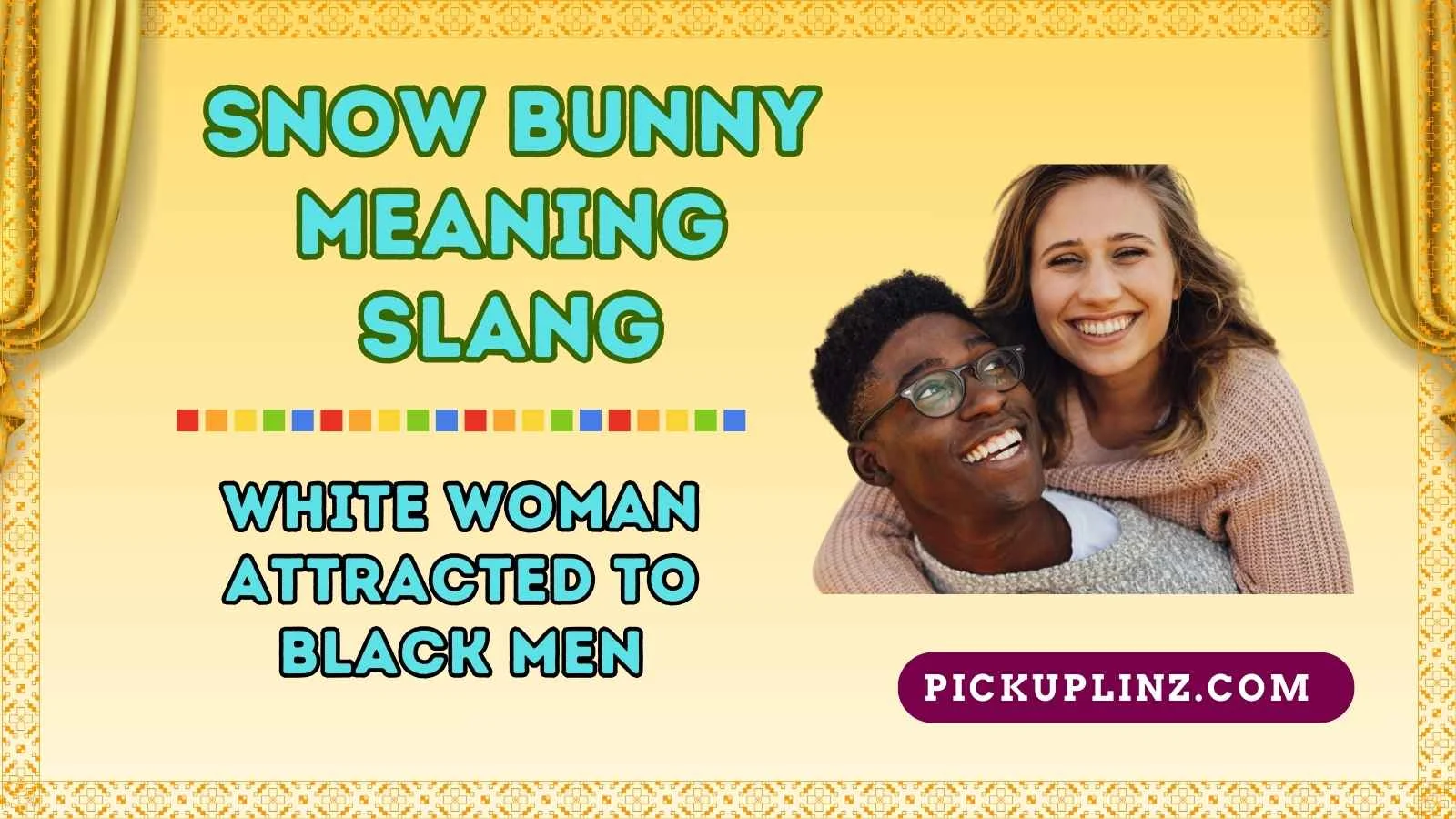
The snow bunny meaning slang primarily refers to a white woman who is romantically or sexually attracted to Black men. The term combines symbolism and imagery:
- Snow → Represents whiteness
- Bunny → Suggests playfulness, flirtation, or desirability
Together, the phrase became a slang expression used mostly in informal or pop-culture-driven spaces.
Key Characteristics of the Slang Meaning
- Informal and conversational
- Often linked to dating or attraction
- Context-dependent (can be playful or offensive)
- Not a universally accepted label
💡 Important note: The meaning can change depending on who uses it, who receives it, and how it is delivered. Tone and relationship matter.
📜 Background and Cultural Origins of Snow Bunny Slang
The slang usage of snow bunny has roots in American urban culture, particularly within hip-hop communities during the late 20th century. It was initially used as an insider term, rarely appearing in mainstream media.
How the Term Evolved
| Era | Usage Context |
|---|---|
| 1980s–1990s | Urban slang, music lyrics |
| Early 2000s | Online forums & blogs |
| 2010s | Social media & memes |
| 2020s | Dating apps & TikTok |
As social platforms expanded, the term escaped its original circles and became widely recognized. With broader exposure came debate, especially regarding racial stereotypes and objectification.
“Slang evolves faster than culture understands it.”
— Linguistic observation from digital communication studies
💬 Usage in Different Contexts
Understanding snow bunny meaning slang requires examining where and how it’s used.
Casual Conversations
Among friends, the term may appear jokingly or sarcastically. In these settings, intent is often lighthearted, but misunderstandings can still happen.
Pop Culture & Media
- Rap lyrics
- Comedy sketches
- Internet memes
Here, the term is often exaggerated for humor or shock value.
Professional Environments
🚫 Not appropriate
Due to racial and sexual undertones, the term should never be used in workplaces, academic writing, or formal communication.
📱 Snow Bunny Meaning in Chat, WhatsApp, Instagram & TikTok
Social media has reshaped how slang spreads, and snow bunny meaning slang is no exception.
Common Social Media Uses
- Self-descriptions in bios
- Hashtags (#snowbunny)
- Jokes in comment sections
- Flirtatious DMs
Platform-Specific Trends
- Used in captions with emojis ❄️🐰
- Often paired with selfies or lifestyle posts
TikTok
- Appears in trend videos
- Sometimes reclaimed humorously
WhatsApp & Chat Apps
- Used casually among friends
- Riskier in private chats due to assumptions
⚠️ Tip: Online tone is easily misread. What feels funny publicly may feel uncomfortable privately.
🧪 Snow Bunny Meaning in Physics, Medical & Aircraft Terminology
Despite frequent online searches, snow bunny has no official meaning in:
- Physics
- Medicine
- Aviation
Why the Confusion Exists
- Nicknames used informally
- Metaphorical language in training
- Misinterpretation of slang as technical terms
✔️ In professional fields, the phrase holds no scientific or academic definition.
❌ Common Misconceptions About Snow Bunny Slang
Many misunderstandings surround the term.
Popular Myths
- ❌ It applies to all white women
- ❌ It’s always a compliment
- ❌ It’s harmless slang everywhere
- ❌ It has a technical definition
Reality Check
The term labels attraction, not identity—and labeling people without consent can feel disrespectful.
🔄 Similar Terms & Alternatives
If clarity and respect are the goal, alternatives often work better.
Neutral Alternatives
- Interracial dating
- Cross-cultural relationships
- Personal preference
Why Alternatives Matter
| Term Type | Risk Level |
|---|---|
| Snow bunny | High (stereotyping) |
| Neutral descriptors | Low |
| Direct communication | Lowest |
Using precise language avoids assumptions and misinterpretation.
🗣️ How to Respond When Someone Uses the Term
If someone calls you a snow bunny or uses the term around you, responses depend on comfort level.
Possible Responses
-
Ask for clarification
“What do you mean by that?” -
Set boundaries
“I’m not comfortable with that label.” -
Deflect with humor
“I prefer not to use labels.”
Communication is more effective than silence when boundaries matter.
🔍 Differences Between Snow Bunny and Similar Words
Unlike neutral descriptors, snow bunny meaning slang is:
- Racially coded
- Gender-specific
- Often sexualized
Comparison Table
| Term | Neutral | Cultural Weight |
|---|---|---|
| Snow bunny | ❌ | High |
| Interracial dating | ✅ | Low |
| Preference-based language | ✅ | Minimal |
Understanding these differences helps navigate conversations respectfully.
❤️ Relevance in Online Conversations & Dating Apps
Dating apps are where snow bunny slang appears most frequently.
Why It’s Used on Dating Platforms
- Signals attraction preferences
- Attempts to stand out
- Mimics pop culture language
Risks in Dating Contexts
- Reduces individuals to stereotypes
- Creates discomfort
- Encourages assumptions
📌 Best practice: Express attraction without labels to keep conversations respectful and inclusive.
📊 Case Study: Social Media Interpretation
Scenario:
A TikTok creator uses #snowbunny humorously in a video.
Outcome:
- Some viewers laugh
- Others criticize stereotyping
- Discussion sparks in comments
Lesson:
Even self-referential usage can be interpreted differently by diverse audiences.
🧠 Psychological and Social Impact of Labels
Labels like snow bunny influence perception.
Psychological Effects
- Objectification
- Identity reduction
- Social pressure
Social Effects
- Reinforcement of stereotypes
- Cultural misunderstanding
- Communication barriers
Language shapes thought—choosing words carefully matters.
🧾 Key Facts About Snow Bunny Meaning Slang
- Originated in urban pop culture
- Popularized by social media
- Not universally accepted
- Context determines acceptability
- No professional or scientific usage
🙋♀️ FAQs:
What does snow bunny mean in slang?
It commonly refers to a white woman attracted to Black men, used informally and contextually.
Is snow bunny an offensive term?
It can be, depending on tone, intent, and the comfort of those involved.
Can someone self-identify as a snow bunny?
Some do, but self-labeling doesn’t remove broader cultural implications.
Is snow bunny used outside dating contexts?
Rarely. Most usage is linked to attraction or pop culture humor.
Should the term be used publicly online?
Caution is advised, as public interpretation varies widely.
🎯 Conclusion: Understanding Snow Bunny Meaning Slang Responsibly
The snow bunny meaning slang is a powerful example of how language, culture, and the internet intersect. While it may appear playful on the surface, the term carries historical, racial, and social layers that deserve thoughtful consideration.
In casual online spaces, it often functions as humor or self-expression, yet it can easily cross into discomfort or stereotyping if used carelessly.

Hi, I’m Ben Mark, the creator behind Pickuplinz.com.
I’ve always believed words have power especially the kind that make people smile, blush, or laugh out loud. That’s what inspired me to build Pickuplinz, a place where fun, charm, and creativity come together through clever pickup lines and playful word magic.
I enjoy turning simple phrases into something memorable. Whether it’s smooth, funny, cheesy, or bold, my goal is to help people break the ice, spark conversations, and add a little confidence to their social game.
When I’m not working on new content, I’m exploring trends, humor styles, and creative ways people connect through words online.
Thanks for being here let’s keep the vibes fun and the lines smooth.