Slang in Spanish is not just about casual words it is a living reflection of culture, identity, emotion, and social connection. People search for slang in Spanish because traditional textbooks rarely teach how real people actually speak.
When you listen to native speakers, scroll through Instagram, chat on WhatsApp, or explore TikTok, you quickly realize that everyday Spanish is filled with informal expressions that don’t appear in dictionaries.
Spanish slang helps people express humor, affection, sarcasm, frustration, and attraction more naturally. It varies widely by country, age group, and social context, making it both exciting and challenging for learners. A slang word used in Mexico may sound strange—or even offensive in Spain or Argentina.
In the digital age, slang in Spanish evolves faster than ever. Social media, music, memes, and dating apps continuously shape new expressions. Understanding slang doesn’t just improve language skills it improves cultural awareness, confidence, and real-world communication.
This comprehensive guide explores meanings, origins, usage, misconceptions, and practical examples so you can understand and use Spanish slang naturally and correctly.
Meaning & Definition of Slang in Spanish
Slang in Spanish refers to informal, non-standard words or phrases commonly used in casual conversation. These expressions are often emotional, playful, exaggerated, or symbolic. They are rarely used in formal writing, academic settings, or official communication.
Key Characteristics of Spanish Slang
- Informal by nature
- Context-dependent
- Region-specific
- Emotionally expressive
- Constantly evolving
Unlike standard vocabulary, slang often breaks grammatical rules or repurposes existing words with new meanings. For example, a normal verb might take on a humorous or ironic tone when used as slang.
Simple Definition
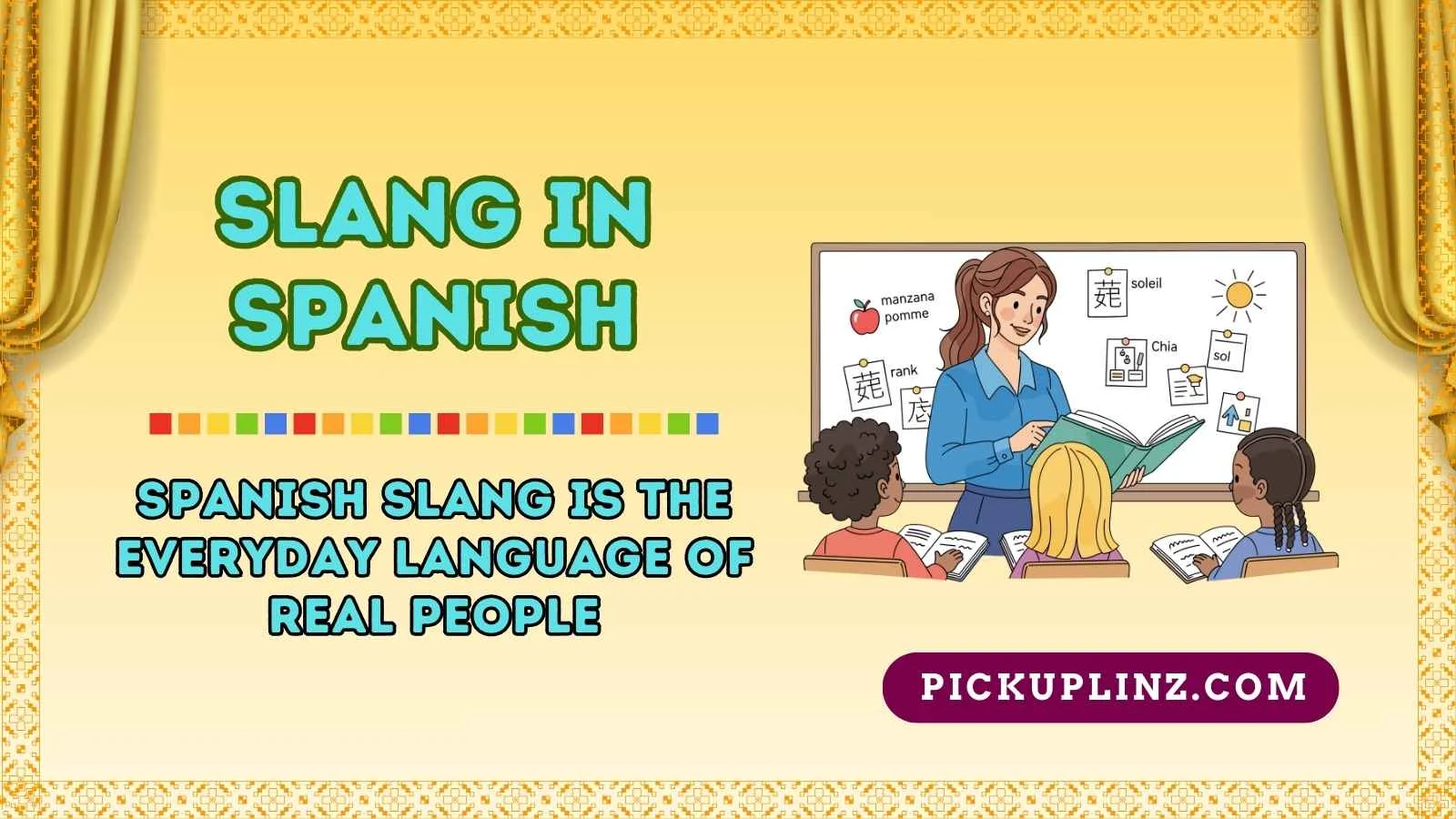
Spanish slang is the everyday language of real people, not classrooms.
It allows speakers to:
- Sound more natural
- Build social bonds
- Express personality
- Show cultural belonging
Background: How Slang in Spanish Developed
Spanish slang has deep historical and cultural roots. Its development is influenced by migration, colonization, local traditions, and global media.
Historical Influences
Spanish slang evolved through:
- Indigenous languages (Nahuatl, Quechua, Guaraní)
- Arabic influence from medieval Spain
- African linguistic patterns
- English loanwords from globalization
- Urban street culture
Each Spanish-speaking country developed its own slang based on local history. For example:
- Caribbean slang reflects African rhythms and music
- Argentine slang includes Italian influence
- Mexican slang blends indigenous and colonial roots
Modern Acceleration
In the last 20 years, slang has spread faster due to:
- Social media
- Music genres like reggaeton and rap
- Streaming platforms
- Online gaming and memes
Today, slang can become international in weeks.
Usage of Slang in Spanish in Different Contexts
Slang in Spanish changes meaning depending on where and how it is used.
Casual Conversations
Slang is most common among:
- Friends
- Family
- Classmates
- Peers
It creates closeness and relaxed communication.
Professional Settings
Generally avoided, except in:
- Creative industries
- Marketing
- Entertainment
- Informal team chats
Rule of Thumb
If you wouldn’t say it to your boss, don’t use slang.
Slang in Spanish on Chat, WhatsApp, Instagram & TikTok
Social media has transformed how Spanish slang is used and created.
Common Features Online
- Shortened words
- Emojis replacing words
- Creative spelling
- Meme-based expressions
Examples of Digital Slang Patterns
| Platform | Usage Style | Purpose |
|---|---|---|
| Short & emotional | Speed + intimacy | |
| Trendy & visual | Engagement | |
| TikTok | Viral & playful | Humor + identity |
| Twitter/X | Sarcastic | Commentary |
Slang online often:
- Softens conversations
- Adds humor
- Expresses attraction
- Creates inside jokes
Slang in Spanish in Physics, Medical & Aircraft Terminology
This is a critical distinction.
Slang in Spanish has NO role in technical or scientific language.
Why Slang Is Not Used
- Physics requires precision
- Medical language must avoid ambiguity
- Aviation communication must be crystal clear
Example
A slang word may have:
- Multiple meanings
- Emotional tone
- Cultural interpretation
That makes it dangerous in technical fields.
Important Rule
Professional Spanish = Zero slang
Common Misconceptions About Slang in Spanish
Misconception 1: Slang Is Bad Spanish
❌ False
Slang is not incorrect—it’s informal, not wrong.
Misconception 2: Slang Is Universal
❌ False
Slang varies widely by:
- Country
- City
- Age group
Misconception 3: Using Slang = Fluency
❌ False
Fluency requires grammar, structure, and context awareness.
Similar Terms & Alternatives to Slang in Spanish
| Term | Description |
|---|---|
| Colloquial Spanish | Casual but neutral |
| Idioms | Fixed expressions |
| Regionalisms | Location-specific words |
| Informal vocabulary | Safer than slang |
Best Alternative for Learners
Neutral informal Spanish is ideal until cultural understanding improves.
How to Respond to Slang in Spanish
If someone uses slang and you’re unsure:
Smart Response Strategies
- Reply in neutral Spanish
- Mirror tone carefully
- Ask politely for clarification
- Use emojis to soften tone
Example Response Styles
- Curious: “¿Qué significa eso?”
- Casual: “Jaja, entiendo”
- Neutral: “Sí, claro”
Differences Between Slang and Similar Words
| Feature | Slang | Idioms | Formal Words |
|---|---|---|---|
| Tone | Casual | Neutral | Professional |
| Stability | Temporary | Stable | Fixed |
| Context | Informal | Broad | Formal |
| Risk | High | Medium | Low |
Relevance of Slang in Spanish in Online Conversations & Dating Apps
Slang plays a huge role in modern dating culture.
Why Slang Matters in Dating
- Shows personality
- Builds attraction
- Creates humor
- Reduces formality
Case Study: Dating Chat Tone
| Style | Result |
|---|---|
| Formal Spanish | Distant |
| Neutral Spanish | Polite |
| Natural slang | Engaging |
Important Tip
Overusing slang can feel forced. Balance is key.
Psychological & Cultural Impact of Slang in Spanish
Slang does more than communicate—it builds identity.
Psychological Effects
- Creates belonging
- Builds trust
- Signals social group
- Reduces emotional distance
Cultural Role
Slang reflects:
- Youth movements
- Music trends
- Political opinions
- Social values
Benefits of Learning Slang in Spanish
Practical Benefits
- Understand real conversations
- Enjoy movies & music
- Improve online chats
- Connect socially
Learning Benefits
- Improves listening skills
- Boosts confidence
- Enhances cultural awareness
Risks of Misusing Slang in Spanish
Common Risks
- Sounding rude unintentionally
- Using outdated expressions
- Misreading tone
- Cultural misunderstandings
Safe Learning Rule
Observe first, use later.
FAQs:
What is slang in Spanish?
Slang in Spanish refers to informal words or phrases used in casual conversations, often varying by region and culture.
Is slang in Spanish the same in all countries?
No, Spanish slang differs greatly between countries and even cities.
Can using slang make me sound fluent?
It helps sound natural, but fluency also requires grammar, vocabulary, and context awareness.
Is slang acceptable in professional Spanish?
Generally no. Professional settings require formal or neutral language.
How can beginners learn slang safely?
By observing native speakers, asking questions, and using neutral informal Spanish first.
Conclusion: Mastering Slang in Spanish the Smart Way
Slang in Spanish is an essential part of real-life communication, reflecting culture, emotion, and modern identity. It brings language to life, making conversations warmer, funnier, and more authentic.
However, slang should be approached with awareness and balance. Understanding when, where, and how to use it is far more important than memorizing expressions.
For learners, slang opens doors to deeper cultural understanding, better social interactions, and more engaging online conversations.
Whether chatting with friends, using dating apps, or exploring social media, mastering Spanish slang allows you to connect beyond grammar and textbooks. Learn it gradually, respect cultural differences, and enjoy the richness it adds to the Spanish language.

My name is Bravo Allen, and I am driven by a strong interest in communication, creativity, and meaningful engagement. I believe that clear ideas and thoughtful expression have the power to inform, inspire, and connect people across different backgrounds.
Throughout my journey, I have focused on personal growth, continuous learning, and developing skills that allow me to present information in a clear and impactful way. I value professionalism, consistency, and integrity in every project I take on. My approach combines creativity with purpose, ensuring that everything I work on is both engaging and valuable.
I am particularly interested in how language, ideas, and digital platforms shape the way people interact and share knowledge today. This perspective motivates me to keep improving, adapting, and contributing in ways that make a positive difference.
My goal is to build work that reflects quality, reliability, and thoughtful communication.