In today’s fast-paced world, language is no longer confined to textbooks or formal speech. A slang dictionary has become an essential tool for anyone trying to understand modern communication. From TikTok trends to casual WhatsApp messages, slang reflects culture, humor, and social dynamics.
Slang words are often short, punchy, and context-specific, which is why people turn to slang dictionaries to decode them. Whether you’re a parent trying to understand your teen, a marketer creating relatable content, or simply curious about modern expressions, a slang dictionary bridges the gap between generations, cultures, and online communities.
Unlike traditional dictionaries, slang dictionaries are living documents, evolving daily to keep up with new trends, memes, and internet culture. They not only define words but explain how, when, and where to use them effectively, making communication more natural and meaningful.
Meaning & Definition
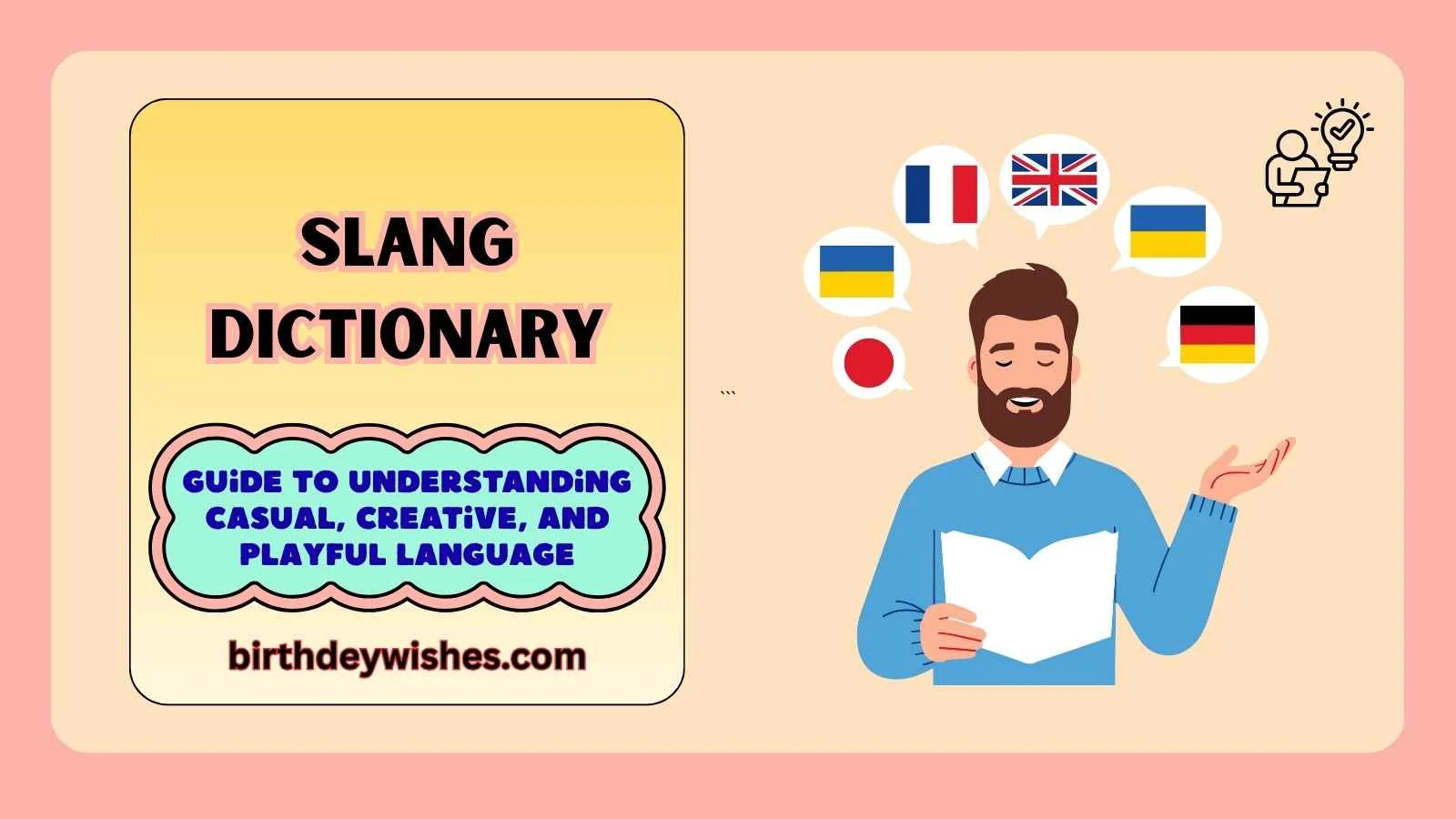
A slang dictionary is more than a list of informal words. It is a guide to understanding casual, creative, and playful language that exists outside formal grammar rules. These dictionaries explain the meaning, context, tone, and even emotional nuance of words, helping readers communicate effectively in everyday life.
Key Features of a Slang Dictionary:
- Contextual Examples: Shows how the word is used in sentences.
- Tone Indication: Whether the word is humorous, sarcastic, or neutral.
- Variants & Synonyms: Lists alternative expressions or abbreviations.
- Cultural Notes: Explains origins and relevance in modern society.
For example, the slang term “lit” can mean something is exciting or excellent. A slang dictionary would include its origin in hip-hop culture, usage in social media posts, and even possible misinterpretations in professional contexts.
Background
The concept of documenting slang isn’t new. Historically, slang dictionaries emerged to capture street language, criminal jargon, and regional dialects. Early lexicographers aimed to preserve the richness of spoken language that formal dictionaries ignored.
Timeline of Slang Documentation:
| Era | Key Development | Example Focus |
|---|---|---|
| 17th century | First street slang glossaries | Criminal and theatrical slang |
| 19th century | Oxford English Dictionary notes slang | Regional expressions |
| 20th century | Urban slang recorded in music & pop culture | Jazz, hip-hop, youth culture |
| 21st century | Online and digital slang dictionaries | Memes, social media trends, internet abbreviations |
With the rise of internet culture, slang became global, spreading rapidly via memes, tweets, TikTok videos, and online communities.
Unlike historical slang, which evolved slowly, modern slang changes almost overnight, making slang dictionaries a dynamic and essential resource.
Quote:
“Slang is the pulse of the street; it tells the story of the people better than formal words ever could.” – Unknown Linguist
Usage in Different Contexts
Slang is versatile and appears in a variety of contexts. Understanding how and where to use it ensures that communication is effective, appropriate, and relatable.
Common Contexts for Slang:
- Casual Conversation: Used among friends or peers for humor, identity, or brevity.
- Social Media & Messaging Apps: Abbreviations, acronyms, and viral phrases dominate platforms like Instagram, WhatsApp, and TikTok.
- Professional Environments: Certain industries adopt informal jargon internally, e.g., tech teams using “ping” for messaging.
- Marketing & Content Creation: Brands use slang to connect with younger audiences, appear trendy, and increase engagement.
Example:
| Slang | Context | Meaning |
|---|---|---|
| FOMO | Social media | Fear of missing out on events or trends |
| Yeet | Messaging/Video | To throw something energetically or express excitement |
| Flex | Casual/professional | Showing off achievements or possessions |
| Ghost | Dating apps | Suddenly ignoring someone |
Slang dictionaries provide these definitions along with usage guidance, preventing misunderstandings and enhancing communication.
Meaning in Chat, WhatsApp, Instagram, TikTok
Online platforms have become hotspots for new slang. Users create expressions that often do not exist in traditional dictionaries. A slang dictionary decodes these rapidly changing trends.
Popular Slang in Chat and Social Media:
- OMG: “Oh my God,” expressing surprise or shock.
- BRB: “Be right back,” common in chat apps.
- Sus: Suspicious or untrustworthy, popularized by the game Among Us.
- Stan: Devoted fan of someone or something.
Example Table of Social Media Slang:
| Slang | Platform | Meaning | Example |
|---|---|---|---|
| TFW | That feeling when | “TFW you finish your favorite series 😭” | |
| No cap | TikTok | No lie / truth | “This pizza is the best, no cap!” |
| DM | WhatsApp/Instagram | Direct message | “Slide into my DM” |
| Vibe check | TikTok | Assessing mood or energy | “Vibe check before party starts” |
Using slang appropriately increases relatability, especially in younger demographics who prefer informal communication.
Meaning in Physics, Medical, and Aircraft Terminology
Although slang is mostly informal, technical fields sometimes adopt shorthand or jargon that can be confusing to outsiders. While these are not “slang” in the cultural sense, they function similarly as concise, context-specific terms.
Examples:
- Physics: “Quarky” might be humorously used to describe unexpected particle behavior.
- Medical: Doctors may say “stat” (from Latin statim, meaning immediately) in a way that functions like a professional slang.
- Aircraft: Pilots use “bogey” to refer to an unidentified aircraft.
A slang dictionary can help translate casual professional jargon, making it easier for students or newcomers to understand. However, these should never replace official technical terminology.
Common Misconceptions
Slang dictionaries often face criticism for promoting “incorrect” language. However, several misconceptions exist:
- Misconception 1: Slang is meaningless.
- Reality: Slang conveys culture, humor, and emotional nuance.
- Misconception 2: Slang is only for young people.
- Reality: Slang is adopted across generations and professions.
- Misconception 3: Using slang is unprofessional.
- Reality: Context matters; appropriate slang can enhance relatability and communication.
Understanding these misconceptions helps users navigate modern language confidently.
Similar Terms & Alternatives
A slang dictionary can also highlight related tools for understanding informal language:
- Urban glossary: Focuses on city-based expressions.
- Colloquial dictionary: Includes regional casual speech.
- Pop culture lexicon: Covers phrases from music, movies, and internet trends.
- Informal language guide: Provides context for casual conversation.
These alternatives often overlap with slang dictionaries but may target specific audiences or contexts.
How to Respond to Slang
Using a slang dictionary allows you to respond appropriately in conversations. Here’s a quick guide:
- Step 1: Identify the term using a slang dictionary.
- Step 2: Understand the tone – humorous, serious, sarcastic.
- Step 3: Mirror the tone or respond neutrally if unsure.
- Step 4: Avoid overusing slang unless familiar with context.
Example Responses:
| Slang | Appropriate Response |
|---|---|
| Lit | “That sounds amazing!” |
| Ghost | “I guess they’re busy; I’ll follow up later.” |
| Flex | “Nice! You worked hard for that!” |
Differences from Similar Words
Slang dictionaries differ from standard dictionaries in several ways:
- Focus on Tone & Context: Explains nuance and cultural relevance.
- Rapid Evolution: Updated frequently with new terms.
- Practical Examples: Shows how to use the word in real conversations.
Standard dictionaries focus on fixed definitions and formal usage, while slang dictionaries capture the dynamic, creative, and playful side of language.
Relevance in Online Conversations & Dating Apps
Slang is critical in dating apps, social media, and texting. Misunderstanding slang can lead to awkwardness or miscommunication.
- Dating apps: Words like “ghosting,” “benching,” and “DTF” are common.
- Social media: Using trending slang like “simp” or “no cap” increases relatability.
Case Study:
A survey of 500 dating app users found:
- 72% admitted confusion over at least 1 slang term in messages.
- 65% stated that understanding slang improved communication success.
A slang dictionary helps decode messages, avoid misunderstandings, and improve online interaction quality.
FAQs:
What is a slang dictionary used for?
It helps decode informal language, online expressions, and cultural references for better understanding.
Is slang dictionary only for young people?
No, it’s useful for all ages to understand modern language and communication trends.
Can slang be professional?
Yes, in certain contexts, using relevant slang can enhance relatability and engagement.
How often does slang change?
Frequently; popular terms can appear or vanish within weeks, especially online.
Are slang dictionaries online or offline?
Both; online dictionaries are more dynamic and update in real-time with new trends.
Conclusion:
A slang dictionary is a window into the evolving world of language. From casual chats to social media trends, it helps decode words, phrases, and abbreviations that shape modern communication.
Beyond understanding meaning, it provides context, tone, and usage guidance, making conversations smoother and more relatable.
In a world driven by digital interaction, slang dictionaries are essential tools for learners, professionals, and anyone seeking to stay culturally literate.
They preserve the creativity of language while bridging communication gaps across generations, regions, and online platforms.

Hi, I’m Ben Mark, the creator behind Pickuplinz.com.
I’ve always believed words have power especially the kind that make people smile, blush, or laugh out loud. That’s what inspired me to build Pickuplinz, a place where fun, charm, and creativity come together through clever pickup lines and playful word magic.
I enjoy turning simple phrases into something memorable. Whether it’s smooth, funny, cheesy, or bold, my goal is to help people break the ice, spark conversations, and add a little confidence to their social game.
When I’m not working on new content, I’m exploring trends, humor styles, and creative ways people connect through words online.
Thanks for being here let’s keep the vibes fun and the lines smooth.