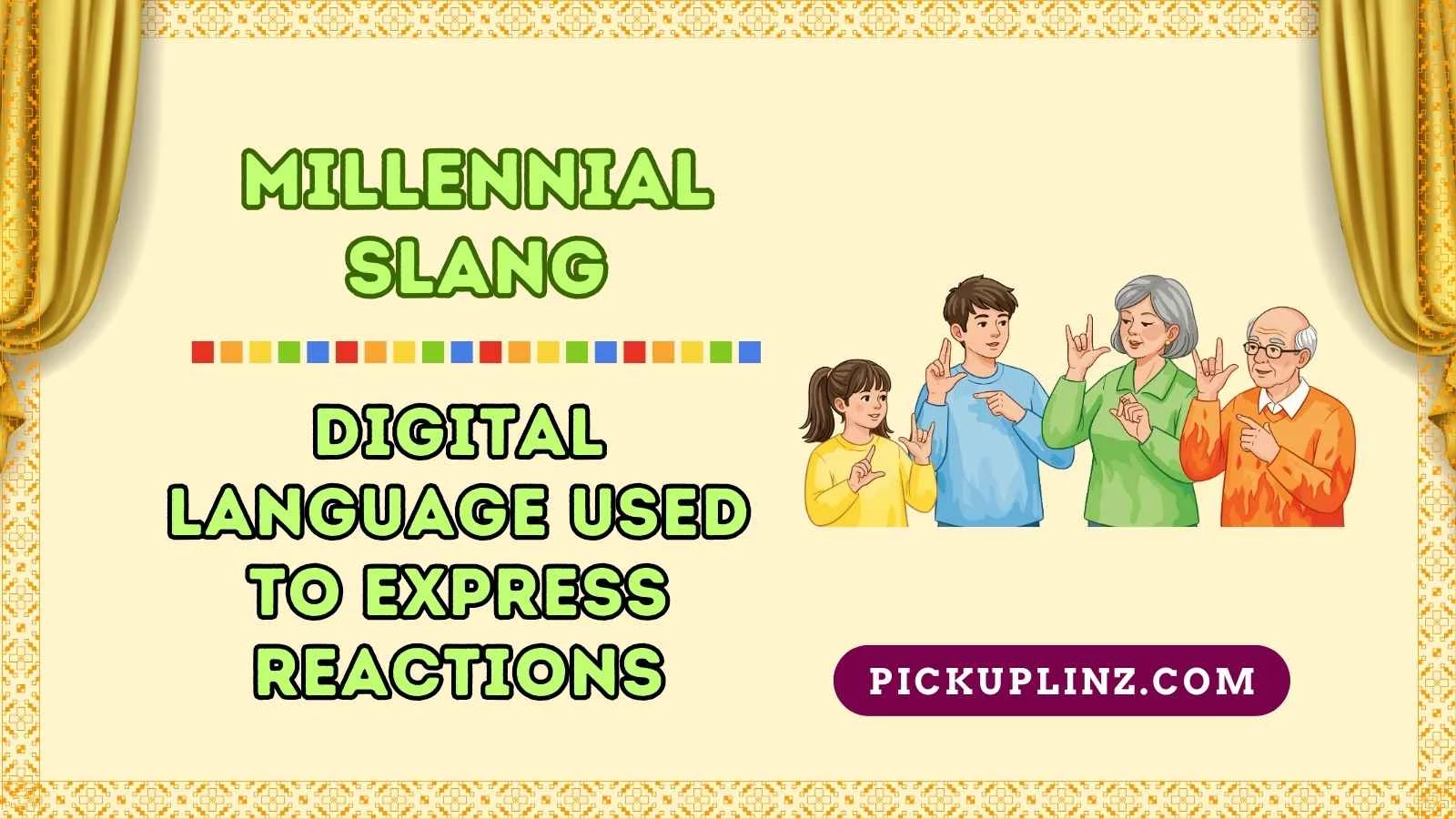
Millennial slang refers to the informal language, expressions, and phrases commonly used by people born between 1981 and 1996. This generation grew up during the explosion of the internet, instant messaging, social media, and smartphones.
As a result, their communication style became fast, expressive, humorous, and emotionally loaded.
People search for millennial slang for many reasons:
- To understand social media captions and comments
- To communicate better with millennials
- To avoid sounding outdated or awkward
- To improve dating app conversations
- To write relatable content or marketing copy
Millennial slang is not random or lazy language. It follows clear patterns, reflects digital culture, and often carries emotional nuance that traditional language cannot capture easily. Words like “low-key,” “adulting,” and “I can’t even” communicate complex ideas instantly.
Understanding millennial slang helps you:
- Sound more natural online
- Build better social connections
- Avoid misunderstandings
- Stay culturally relevant
In short, millennial slang is a living language system—and it’s still shaping how the internet talks today.
Meaning & Definition of Millennial Slang
Millennial slang is a collection of informal, conversational expressions developed and popularized by millennials, primarily through digital platforms like texting, forums, memes, and social media.
Key Characteristics of Millennial Slang
- Emotion-driven – expresses feelings quickly
- Context-based – meaning changes with tone
- Humor-focused – sarcasm and irony are common
- Internet-born – spread through memes and platforms
- Flexible – adapts easily to new trends
Simple Definition
Millennial slang is informal digital language used to express reactions, emotions, and opinions in a relatable, often humorous way.
Example Breakdown
| Slang Term | Literal Meaning | Actual Meaning |
|---|---|---|
| I’m dead | Not alive | Something is extremely funny |
| Low-key | Quietly | Slightly or secretly |
| Adulting | Being an adult | Managing responsibilities |
| Salty | Tastes salty | Feeling bitter or annoyed |
| Lit | On fire | Fun, exciting, energetic |
Millennial slang often exaggerates reality to create humor or emotional emphasis.
Background: How Millennial Slang Developed
Millennial slang didn’t appear overnight. It evolved alongside technology, pop culture, and social change.
Key Influences Behind Millennial Slang
- Early internet culture (chat rooms, forums)
- SMS texting with character limits
- Social media platforms (Facebook, Twitter, Instagram)
- Pop culture & memes
- Hip-hop and urban language
- Shared generational struggles
Timeline of Influence
| Era | Impact on Slang |
|---|---|
| Late 1990s | Chat abbreviations (LOL, BRB) |
| Early 2000s | Emo culture, message boards |
| 2010–2015 | Meme-driven phrases |
| 2016–2020 | Instagram & viral slang |
| 2021–Now | Blended with Gen Z slang |
Cultural Impact
Millennials faced:
- Student loan debt
- Job market instability
- Delayed home ownership
Words like “adulting” emerged as a humorous way to cope with these realities. Slang became emotional shorthand for shared experiences.
Usage of Millennial Slang in Different Contexts
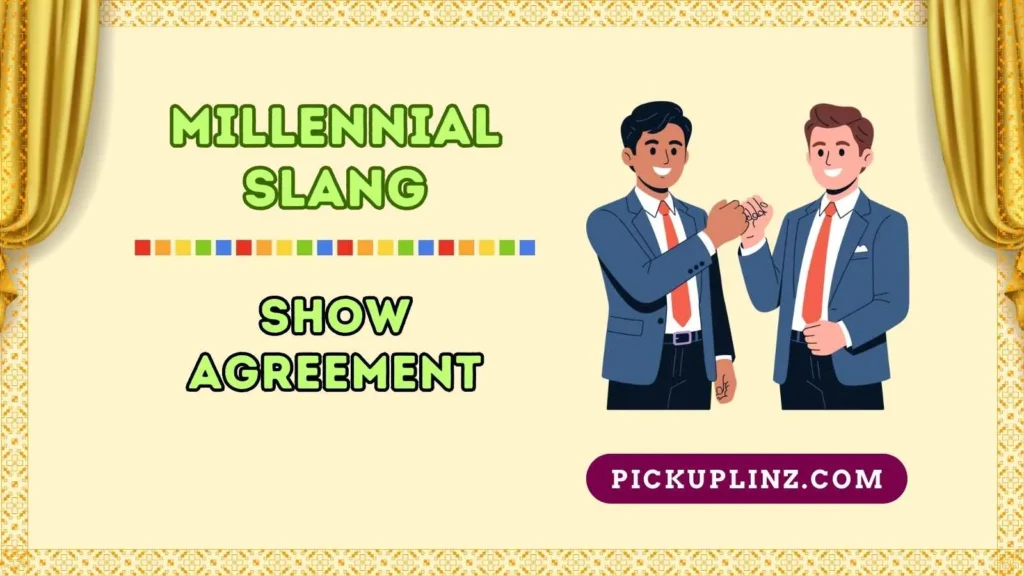
Millennial slang changes depending on where and how it’s used.
Casual Conversations
Used freely with friends to:
- Show agreement (“same”)
- React emotionally (“I can’t even”)
- Add humor (“big yikes”)
Social Media
Used for:
- Engagement
- Relatability
- Humor
Examples:
- Instagram captions
- Meme text
- Comment reactions
Professional Environments
Limited but present in:
- Slack messages
- Startup culture
- Creative industries
Acceptable examples:
- “Let’s circle back”
- “Quick sync”
- “Touch base”
⚠️ Note: Context matters. Heavy slang in formal settings can reduce credibility.
Meaning of Millennial Slang in Chat, WhatsApp, Instagram & TikTok
Chat & WhatsApp
- Short responses
- Emoji-supported slang
- Emotional efficiency
Example:
“That meeting was a mess 💀”
- Caption-focused slang
- Aesthetic and relatable tone
Example:
“Low-key obsessed with this vibe ✨”
TikTok
- Fast-evolving meanings
- Trend-based slang
TikTok often redefines existing millennial slang or exaggerates it for humor.
| Platform | Slang Speed | Style |
|---|---|---|
| Slow | Personal | |
| Medium | Visual | |
| TikTok | Fast | Trend-driven |
Meaning in Physics, Medical, and Aircraft Terminology
Millennial slang has no official meaning in technical fields, but overlapping words can cause confusion.
Examples of Confusion
| Word | Slang Meaning | Technical Meaning |
|---|---|---|
| Viral | Popular | Infection-related |
| Crash | Emotional burnout | System or aircraft failure |
| Dead | Funny | No electrical activity |
Important Rule
Always separate casual language from technical communication.
In professional or academic fields, slang should be avoided to maintain clarity and accuracy.
Common Misconceptions About Millennial Slang
“It’s lazy language”
❌ False
Millennial slang is efficient, not lazy. It condenses meaning.
“Only young people use it”
❌ False
Many terms have entered mainstream language.
“It has no rules”
❌ False
Slang follows:
- Tone rules
- Context rules
- Platform norms
Similar Terms & Alternatives to Millennial Slang
Related Language Types
- Internet slang
- Gen Z slang
- Text abbreviations
- Meme language
Millennial Slang vs Gen Z Slang
| Feature | Millennial | Gen Z |
|---|---|---|
| Tone | Sarcastic | Absurd |
| Speed | Moderate | Rapid |
| Style | Irony | Chaos humor |
Alternatives
- Emojis 😊
- GIF reactions
- Neutral expressions
How to Respond to Millennial Slang Correctly
Best Practices
- Match the tone
- Don’t overuse
- Ask if confused
Examples
Someone says:
“That was low-key awkward”
Good response:
“Yeah, I felt that 😅”
Neutral response:
“I get what you mean”
Differences Between Millennial Slang and Similar Words
Millennial slang relies on:
- Shared cultural memory
- Internet humor
- Emotional exaggeration
Older colloquial language is:
- Region-based
- Literal
- Less digital
This difference makes millennial slang feel more global and internet-native.
Relevance of Millennial Slang in Online Conversations & Dating Apps
Millennial slang plays a huge role in online dating and messaging.
Why It Works
- Signals personality
- Reduces awkwardness
- Creates relatability
Dating App Examples
| Slang | Effect |
|---|---|
| “Low-key love coffee” | Casual interest |
| “Big foodie energy” | Personality signal |
| “No red flags pls” | Humor + boundary |
⚠️ Overusing slang can feel forced—balance is key.
FAQs:
What age group uses millennial slang most?
Millennial slang is mainly used by people aged late 20s to early 40s, but it’s widely adopted across generations online.
Is millennial slang still relevant today?
Yes. Many millennial slang terms are now part of mainstream digital communication.
Can millennial slang be used professionally?
Light usage is acceptable in casual or creative workplaces, but formal settings require restraint.
Why does millennial slang sound sarcastic?
Sarcasm and irony reflect millennial humor and coping mechanisms shaped by internet culture.
How can I learn millennial slang faster?
Observe social media, memes, and conversations rather than memorizing word lists.
Conclusion: Why Millennial Slang Still Matters
Millennial slang is not a passing trend—it’s a reflection of how an entire generation adapted language to a digital world. Built on humor, emotion, and shared experiences, it allows people to communicate more efficiently and authentically online.
From chats and social media to dating apps and casual workspaces, millennial slang continues to influence modern communication.
Understanding it helps you connect better, sound more relatable, and navigate online conversations with confidence. You don’t need to use every term—just recognizing and respecting the language makes a difference.
As digital culture evolves, millennial slang remains a powerful bridge between traditional language and the ever-changing internet world.

Hi, I’m Ben Mark, the creator behind Pickuplinz.com.
I’ve always believed words have power especially the kind that make people smile, blush, or laugh out loud. That’s what inspired me to build Pickuplinz, a place where fun, charm, and creativity come together through clever pickup lines and playful word magic.
I enjoy turning simple phrases into something memorable. Whether it’s smooth, funny, cheesy, or bold, my goal is to help people break the ice, spark conversations, and add a little confidence to their social game.
When I’m not working on new content, I’m exploring trends, humor styles, and creative ways people connect through words online.
Thanks for being here let’s keep the vibes fun and the lines smooth.