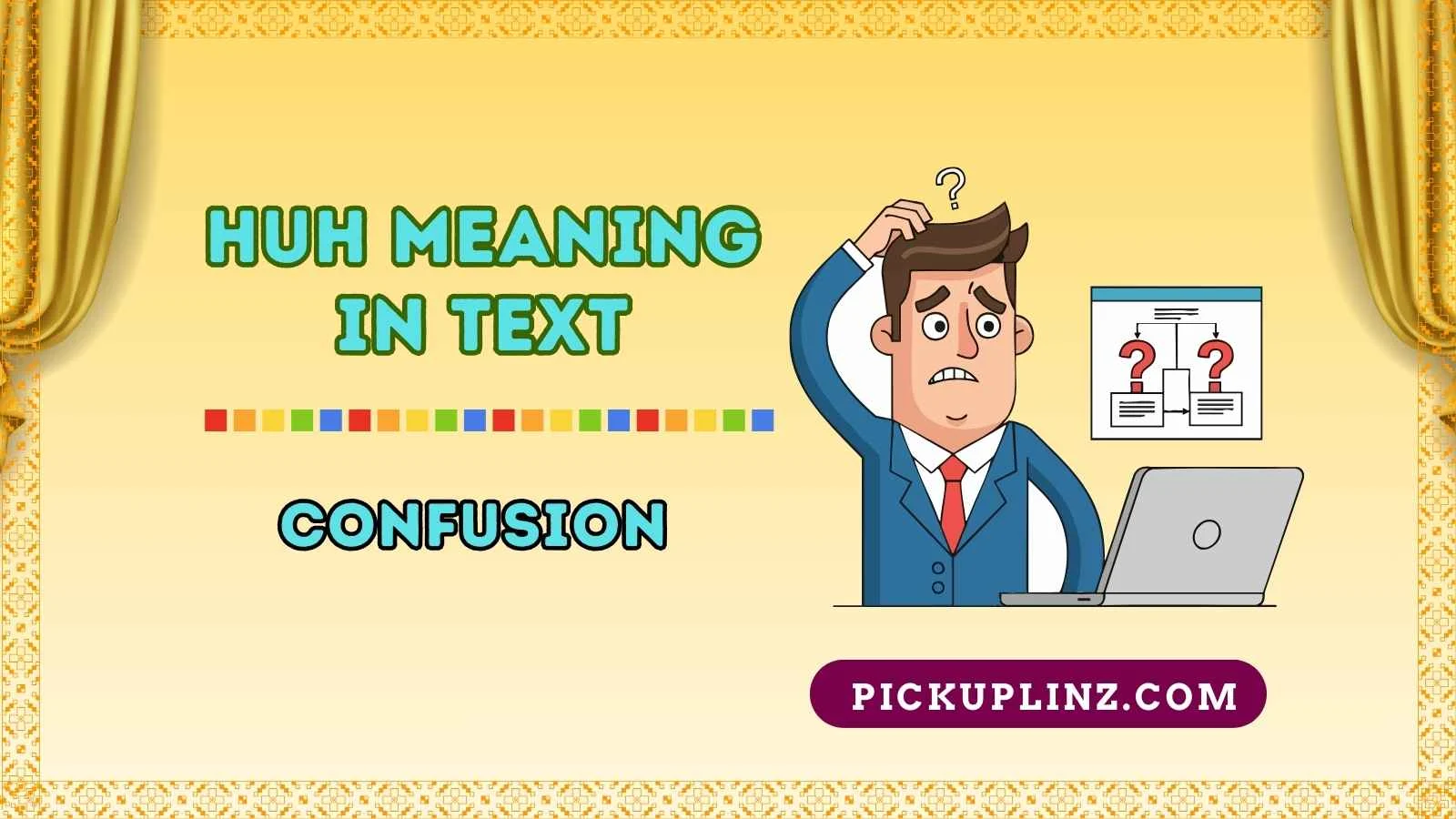
If you’ve ever received a message that simply says “Huh?” and wondered what it really means, you’re not alone. The term “huh” is one of the most commonly used expressions in texting, yet its meaning can vary depending on tone, context, and situation.
People often search for “huh meaning in text” because this tiny word can carry multiple interpretations from confusion to curiosity, surprise, or even mild annoyance.
In today’s fast-paced digital world, understanding such short, informal expressions is crucial for smooth communication, especially when tone and facial expressions are missing.
Whether it’s a friend, coworker, or crush texting you “huh,” deciphering it correctly helps avoid misunderstandings.
Let’s break down what “huh” really means, where it came from, and how it’s used across different platforms from chats and social media to professional and technical contexts.
Meaning & Definition:
At its core, “huh” is an informal interjection used to express confusion, surprise, disbelief, or the need for repetition. In texting, it’s often a quick way to ask someone to clarify what they just said—like saying “What?” or “Excuse me?” in speech.
Dictionary-style definition:
Huh (interjection): A sound or word used to express that one did not understand something, is surprised, or is questioning what was said.
The beauty of “huh” lies in its simplicity. It doesn’t follow strict grammatical rules but is universally recognized. Linguists have even studied it as a near-universal human sound, appearing in many languages worldwide with slight variations. In text messages, “huh” can carry emotional tone depending on context or punctuation.
- “Huh?” — Indicates confusion or a request for clarification.
- “Huh.” — Suggests disappointment, disbelief, or realization.
- “Huh!” — Expresses surprise, shock, or a “Wow, really?” reaction.
Thus, tone and punctuation play a major role in how it’s interpreted. While casual, “huh” can also appear in semi-formal communication when used carefully to convey curiosity or doubt.
Background:
The word “huh” has existed in spoken language for centuries, long before texting or the internet. Linguistic studies show that similar sounds—“ha,” “eh,” “huh,” “heh”—appear naturally in many cultures. This makes “huh” one of the few universal conversational repair words, meaning it helps people fix communication breakdowns by asking for clarification.
In English, “huh” became widely recognized in casual speech during the 20th century. With the rise of texting and online chats, the word migrated into digital communication, preserving its informal, flexible nature. It’s now a staple of modern digital language—short, expressive, and easy to type.
Cultural nuances also affect how “huh” is used. In Western cultures, it’s often casual or curious; in some Asian contexts, it may seem slightly impolite unless used among friends. Understanding these subtleties helps prevent miscommunication in cross-cultural chats and online exchanges.
Usage in Different Contexts:
“Huh” adapts easily to its environment. Its meaning can shift depending on who says it, where it’s said, and what tone accompanies it.
1. In Casual Chat:
Used to express confusion or surprise.
- Friend 1: “I saw your ex yesterday.”
- Friend 2: “Huh?” (means “Wait, what?” or “Really?”)
2. In Social Media Posts:
“Huh” often appears in comments when users are puzzled or shocked by a post.
- Example: “Huh, didn’t expect that ending!”
3. In Professional Fields (emails or meetings):
In formal communication, “huh” is rarely appropriate. However, it may appear informally in workplace chats among colleagues, signaling curiosity or disbelief.
- Example: “Huh, that’s interesting data from the report.”
4. As a Reaction or Filler:
Sometimes, “huh” doesn’t carry strong meaning—it’s just a filler that shows engagement or mild surprise, similar to “oh” or “hmm.”
The context, tone, and relationship between people determine how “huh” is perceived. For instance, a partner texting “huh” could mean confusion, while a coworker might use it to signal curiosity.
Meaning in Chat, WhatsApp, Instagram, TikTok:
Across messaging platforms, “huh” remains popular due to its brevity and expressiveness.
1. Chat & WhatsApp:
When someone sends “huh?” it usually means they didn’t understand your message or need more details.
- Example:
- You: “Meet me at 8.”
- Them: “Huh? Where?”
Sometimes, “huh” can show light teasing or disbelief.
- “Huh, so you finally finished that project!”
2. Instagram Comments & DMs:
Used in comments or replies to express shock, disbelief, or curiosity about photos, captions, or stories.
- “Huh, I didn’t know you dyed your hair!”
3. TikTok:
On TikTok, “huh” has become a meme sound and a reaction word in captions or videos. It often conveys surprise or ironic confusion in response to absurd or funny clips.
4. Snapchat & Other Apps:
“Huh” can also be used as a conversation starter or playful reply to keep chats going when users are unsure how to respond.
Digital tone is everything—without facial cues, “huh” can be taken humorously or rudely, depending on timing and punctuation.
Meaning in Physics, Medical, and Aircraft Terminology:
Interestingly, “HUH” is not only an expression—it also appears as abbreviations in various professional fields.
1. Physics:
In some informal discussions, “huh” may appear as a humorous expression of confusion after a complex concept. However, it’s not a recognized physics term.
2. Medical Field:
- HUH: Can stand for “Hospital University of Heidelberg” or “Howard University Hospital.”
- HUH Syndrome: Rarely, “HUH” may appear as shorthand in internal hospital documentation, referring to “Hospital Utilization Hours” or patient flow indicators.
3. Aircraft & Aviation:
In aviation, “HUH” can serve as an ICAO airport code for Huahine-Fare Airport in French Polynesia. Pilots and controllers use “HUH” as shorthand when referencing that destination.
Thus, while “huh” in text is a conversational cue, in professional contexts it can carry specific, non-linguistic meanings depending on the field.
Common Misconceptions:
A few misunderstandings surround the word “huh.”
- It’s rude: Not necessarily. Tone determines politeness. Adding a polite phrase (“Huh? Could you repeat that?”) keeps it friendly.
- It means disbelief or sarcasm: Sometimes true, but not always. Many use “huh” simply for clarity, not to challenge the speaker.
- It’s a Gen Z word: “Huh” predates the internet—it’s been around for centuries.
- It shows ignorance: Actually, it shows engagement—you’re asking for more information.
“Huh” is not inherently negative; context defines its intent.
Similar Terms & Alternatives:
If you’re unsure about using “huh,” here are alternatives depending on tone and situation:
- “What?” — Direct, but can sound blunt.
- “Sorry?” — Polite and neutral, good for professional chats.
- “Really?” — Expresses disbelief or surprise.
- “Wait, what?” — A humorous or informal way to show confusion.
- “Excuse me?” — Formal and respectful.
- “Hmm?” — Softer and more thoughtful.
Each conveys a slightly different emotional weight. “Huh” sits between casual and curious—it’s less formal than “Excuse me?” but more expressive than “What?” That’s why it remains so versatile in online talk.
How to Respond to It:
When someone texts you “huh,” your response depends on what they mean:
- If they’re confused: Clarify your previous message.
- You: “Meet me at 8.”
- Them: “Huh?”
- You: “I meant 8 PM at the café.”
- If they’re surprised: Acknowledge or explain.
- Them: “Huh, you got promoted?”
- You: “Yes! Just got the news today.”
- If they’re teasing: Keep it light.
- Them: “Huh, finally finished your report?”
- You: “Better late than never!”
Always consider tone and relationship. Over text, brevity can cause misinterpretation—so add emojis or clarifying words if needed.
Differences from Similar Words:
| Word | Tone | Typical Use | Example |
|---|---|---|---|
| Huh | Curious/Confused | Informal chats | “Huh? What do you mean?” |
| What | Neutral/Blunt | Clarification | “What did you say?” |
| Eh | Casual/Playful | Regional slang | “Eh, not bad.” |
| Hmm | Thoughtful | Reflective | “Hmm, interesting idea.” |
| Oh | Surprised | Reaction | “Oh, I didn’t know!” |
While “what” is more direct, “huh” feels softer and more human. It implies engagement rather than challenge, making it preferable in friendly exchanges.
Relevance in Online Conversations & Dating Apps:
On dating apps and modern chats, tone is everything—and “huh” plays a subtle role. It can signal curiosity, mild teasing, or even flirtation depending on context.
- Curiosity:
- Them: “I love climbing volcanoes.”
- You: “Huh, that’s adventurous!”
- Flirting:
- Them: “I can make the best coffee.”
- You: “Huh, I’ll need proof of that.”
- Confusion or Clarification:
- Them: “I’m free at 9.”
- You: “Huh? Morning or night?”
Because “huh” feels casual and conversational, it keeps digital exchanges natural and approachable. However, overusing it may seem disinterested, so balance is key.
FAQs:
-
What does “huh” mean in text?
It shows confusion, surprise, or a request for clarification. -
Is “huh” rude to say in chat?
Not usually—tone and context determine politeness. -
Does “huh” have professional meanings?
Yes, as abbreviations in medical and aviation fields. -
Can “huh” mean disbelief?
Yes, especially when punctuated with “!” or “.” -
What’s the difference between “huh” and “what”?
“Huh” is softer and more casual; “what” sounds more direct.
Conclusion:
The word “huh” may be small, but it carries a world of meaning. Whether it signals confusion, curiosity, or surprise, its tone and context define interpretation.
In texting, it bridges gaps left by missing facial cues, helping people stay connected and expressive.
Across cultures and professions, “huh” continues to prove its versatility from casual chats to technical abbreviations.

Hi, I’m Ben Mark, the creator behind Pickuplinz.com.
I’ve always believed words have power especially the kind that make people smile, blush, or laugh out loud. That’s what inspired me to build Pickuplinz, a place where fun, charm, and creativity come together through clever pickup lines and playful word magic.
I enjoy turning simple phrases into something memorable. Whether it’s smooth, funny, cheesy, or bold, my goal is to help people break the ice, spark conversations, and add a little confidence to their social game.
When I’m not working on new content, I’m exploring trends, humor styles, and creative ways people connect through words online.
Thanks for being here let’s keep the vibes fun and the lines smooth.