Cap slang is one of the most widely used expressions in modern digital language. You see it in Instagram comments, TikTok videos, WhatsApp chats, tweets, dating apps, and even music lyrics. People search for cap slang because it appears everywhere, yet its meaning can feel confusing at first, especially for those new to internet culture.
In simple terms, cap slang is used to describe lies, exaggerations, or false claims, while its opposite, “no cap,” signals honesty and truth. The term has become popular because it is short, expressive, and emotionally powerful. Instead of saying long sentences like “I don’t believe you,” people simply say “cap.”
What makes cap slang fascinating is its flexibility. It can be playful, sarcastic, serious, or humorous depending on context. It also carries cultural significance, rooted in language evolution and online communities.
This in-depth guide breaks down everything you need to know about cap slang from its meaning and origin to its use in chats, professional fields, science, dating apps, and beyond.
Meaning & Definition of Cap Slang
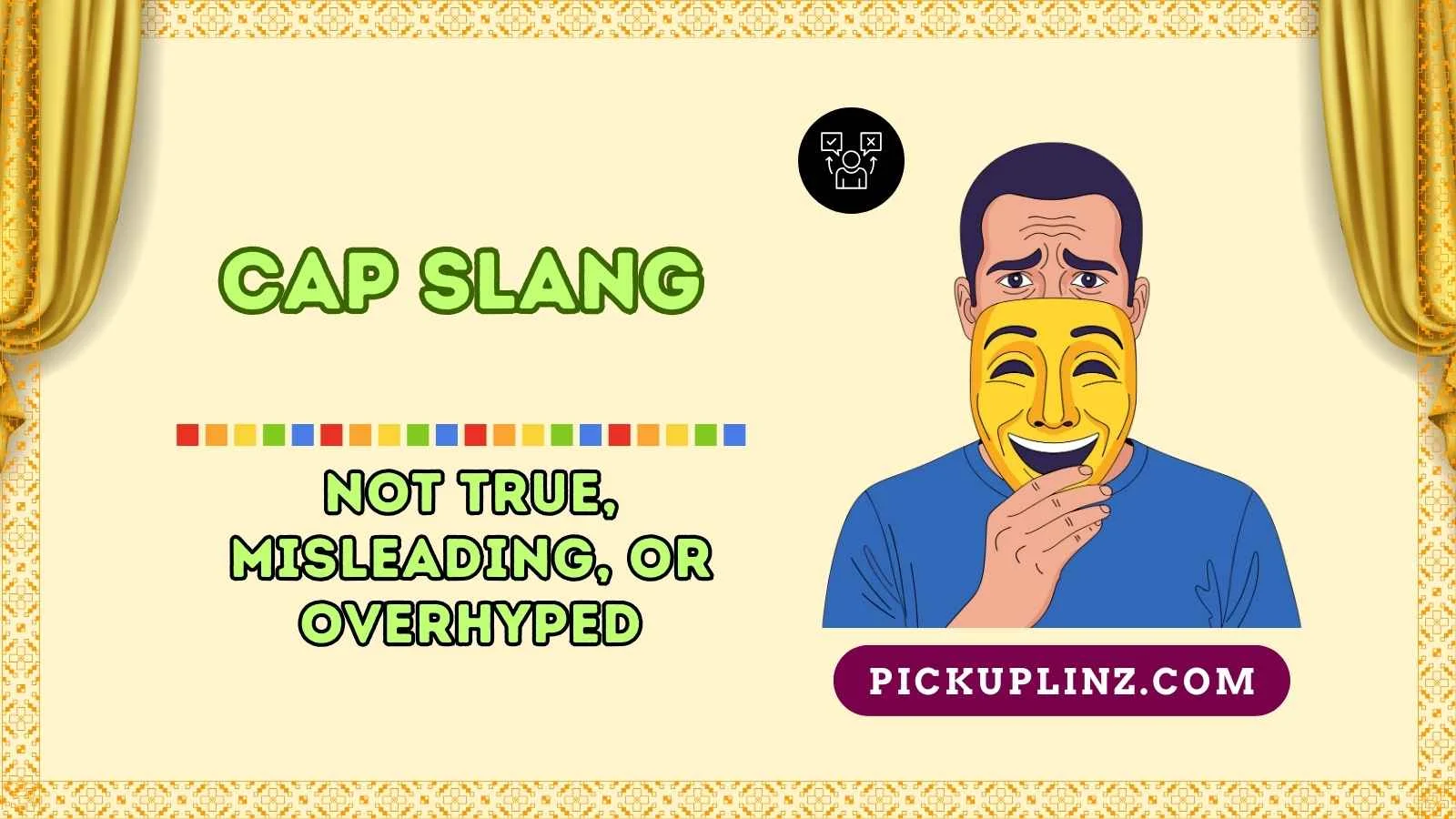
Cap slang refers to a statement that is not true, misleading, or overhyped. When someone calls something “cap,” they are saying it is a lie or exaggeration. On the flip side, “no cap” means truth, honesty, or no exaggeration at all.
Basic Definitions
- Cap → A lie, false statement, or exaggeration
- No cap → Truthful, honest, serious, or real
Simple Examples
- “You got 100% on every exam? That’s cap.”
- “This is the best pizza in town, no cap.”
- “He said he’d text back, but that was cap.”
Cap slang works because it compresses meaning into a single word. It communicates disbelief or honesty instantly, which is perfect for fast-paced digital conversations.
Tone Matters
Cap slang is usually:
- Casual
- Non-aggressive
- Often humorous
However, depending on delivery, it can also sound confrontational. Context and tone always determine meaning.
Background & Origin of Cap Slang
Cap slang originated from African American Vernacular English (AAVE). Historically, the word “cap” was used to mean boasting or bragging falsely. Over time, the meaning evolved into directly referring to lies or exaggerations.
Cultural Evolution
Cap slang gained mainstream attention through:
- Hip-hop culture
- Rap lyrics emphasizing authenticity
- Street conversations
- Viral memes and social media trends
The phrase “no cap” became especially popular in music, where artists used it to emphasize honesty in their lyrics.
Quote:
“Language evolves where culture thrives, and slang follows the rhythm of the people.”
Why It Spread So Fast
- Short and memorable
- Easy to type
- Emotionally expressive
- Works globally in digital spaces
Once TikTok and Instagram creators began using it regularly, cap slang crossed borders and age groups quickly.
Usage of Cap Slang in Different Contexts

Cap slang adapts easily across communication styles. Below is how it appears in various settings.
Casual Chats
In everyday texting, cap slang is friendly and playful.
Examples:
- “You said you’d be on time—cap.”
- “That movie was amazing, no cap.”
Social Media
On platforms like Instagram and TikTok:
- Used in captions
- Used in comments
- Used as reactions to bold claims
Example captions:
- “Best glow-up of the year, no cap ✨”
- “This edit goes hard, no cap 🔥”
Professional Environments
Cap slang is generally not recommended in formal emails or corporate communication. However, it may appear in:
- Creative industries
- Startup culture
- Informal team chats
Professional Tip:
Use cap slang only when you are sure the environment is relaxed and culturally aligned.
Meaning of Cap Slang in Chat Apps (WhatsApp, Instagram, TikTok)
Each platform gives cap slang a slightly different flavor.
- Used for quick reactions
- Casual tone
- Mostly between friends
Example:
“That story you sent? Cap 😂”
- Used publicly in comments
- Often sarcastic or humorous
- Popular with emojis
Example:
“No cap, this pic deserves more likes 💯”
TikTok
TikTok played a massive role in mainstreaming cap slang.
Common uses:
- Storytime videos
- Reaction videos
- Trending audios
Example:
“POV: When they say they’re over it (cap).”
Meaning of Cap in Physics, Medical & Aircraft Terminology
Outside slang, cap has serious technical meanings.
Physics
In physics, “cap” often refers to:
- Capacitor: A device that stores electrical energy
- Capillary action: Liquid movement in narrow spaces
Medical Field
In medicine, cap may refer to:
- Protective caps on instruments
- Anatomical caps like joint coverings
- Surgical caps
Aircraft & Aviation
In aviation, cap can mean:
- Protective component covers
- Abbreviations in manuals
- Equipment caps
📌 Important:
These meanings are completely unrelated to cap slang and depend entirely on technical context.
Common Misconceptions About Cap Slang

Many people misunderstand cap slang. Let’s clear things up.
Misconception 1: Cap Slang Is Rude
Not true. Most of the time, it’s playful or joking.
Misconception 2: Cap Means a Hat
While “cap” literally means a hat, slang usage has nothing to do with clothing.
Misconception 3: It’s Only for Teenagers
Cap slang is used by:
- Teens
- Young adults
- Influencers
- Creators
- Even brands
Similar Terms & Alternatives to Cap Slang
Cap slang has several close alternatives, each with its own tone.
| Term | Meaning | Tone |
|---|---|---|
| Lie | False statement | Direct |
| Fake | Not real | Critical |
| Exaggeration | Overstated | Neutral |
| For real | Truth | Casual |
| Honestly | Truth | Polite |
“No cap” is often interchangeable with:
- “For real”
- “Honestly”
- “Not gonna lie”
How to Respond to Cap Slang
Knowing how to reply keeps conversations smooth.
If Someone Says “That’s Cap”
You can:
- Clarify your statement
- Joke back
- Provide proof
Example responses:
- “No cap, I swear.”
- “Haha, believe what you want.”
- “Check the screenshot.”
If Someone Says “No Cap”
You can:
- Agree
- Ask more questions
- Match the tone
Example:
“No cap? Alright, I trust you.”
Differences Between Cap Slang and Similar Words
Cap slang is softer than calling someone a liar directly.
Comparison Table
| Word | Confrontation Level | Usage |
|---|---|---|
| Lie | High | Formal/Direct |
| Cap | Low | Casual/Playful |
| Fake | Medium | Critical |
| Exaggerated | Neutral | Explanatory |
Cap slang allows disagreement without escalating tension, which is why it thrives online.
Relevance of Cap Slang in Online Conversations & Dating Apps
Cap slang is especially popular in dating apps like Tinder, Bumble, and Hinge.
Why It Works in Dating
- Lighthearted tone
- Shows cultural awareness
- Makes chats fun
Dating App Examples
- “You really 6 feet tall or is that cap?”
- “Best date ever, no cap.”
Using cap slang correctly can:
- Break the ice
- Create humor
- Build connection
⚠️ Overuse, however, can feel immature. Balance is key.
Real Life Case Study: Brand Use of Cap Slang
Some brands successfully integrate cap slang into marketing.
Example Scenario
A streetwear brand posts:
“Our cleanest drop yet, no cap 🔥”
Results:
- Higher engagement
- Younger audience appeal
- Relatable brand voice
📌 Lesson:
Cap slang works when aligned with brand identity.
Key Facts About Cap Slang
- Originated from AAVE
- Popularized by music and social media
- Means lie or truth depending on usage
- Widely used on TikTok and Instagram
- Informal and context-dependent
FAQs:
What does cap slang mean in simple words?
Cap slang means a lie or exaggeration, while no cap means truth or honesty.
Is cap slang offensive?
No, it is usually playful and casual unless used aggressively.
Can cap slang be used professionally?
Only in informal or creative work environments, not formal communication.
What is the opposite of cap slang?
“No cap,” which means honest or truthful.
Why do people say no cap so often?
It emphasizes sincerity and adds emotional emphasis to statements.
Conclusion: Why Cap Slang Matters Today
Cap slang is more than just a trendy phrase, it reflects how language adapts to digital culture. Its ability to express disbelief or honesty in a single word makes it incredibly powerful for online communication.
From casual chats and social media to dating apps and pop culture, cap slang helps people connect quickly and authentically.
Understanding cap slang allows you to interpret conversations accurately, avoid misunderstandings, and stay culturally relevant.
Whether you use it playfully or just want to understand what others mean, knowing when something is “cap” or “no cap” gives you an edge in modern communication.

Hi, I’m Ben Mark, the creator behind Pickuplinz.com.
I’ve always believed words have power especially the kind that make people smile, blush, or laugh out loud. That’s what inspired me to build Pickuplinz, a place where fun, charm, and creativity come together through clever pickup lines and playful word magic.
I enjoy turning simple phrases into something memorable. Whether it’s smooth, funny, cheesy, or bold, my goal is to help people break the ice, spark conversations, and add a little confidence to their social game.
When I’m not working on new content, I’m exploring trends, humor styles, and creative ways people connect through words online.
Thanks for being here let’s keep the vibes fun and the lines smooth.