ASL slang has been a part of online culture for decades, yet it remains a term that confuses many. Widely recognized as an abbreviation, ASL slang is often seen in chats, social media, and dating apps. People frequently search for it to understand its meaning and the correct context for using it.
Originally, ASL emerged in chat rooms and instant messaging platforms during the late 1990s. Users wanted a fast way to get personal information without typing long sentences. Today, it still exists, though its usage has evolved with platforms like WhatsApp, Instagram, and TikTok.
Interestingly, ASL isn’t just slang. It also represents American Sign Language, a fully developed language, and technical abbreviations in professional fields like medicine, aviation, and physics. Understanding ASL slang is essential to avoid misunderstandings in digital conversations while appreciating its historical significance in online communication.
Meaning & Definition of ASL Slang
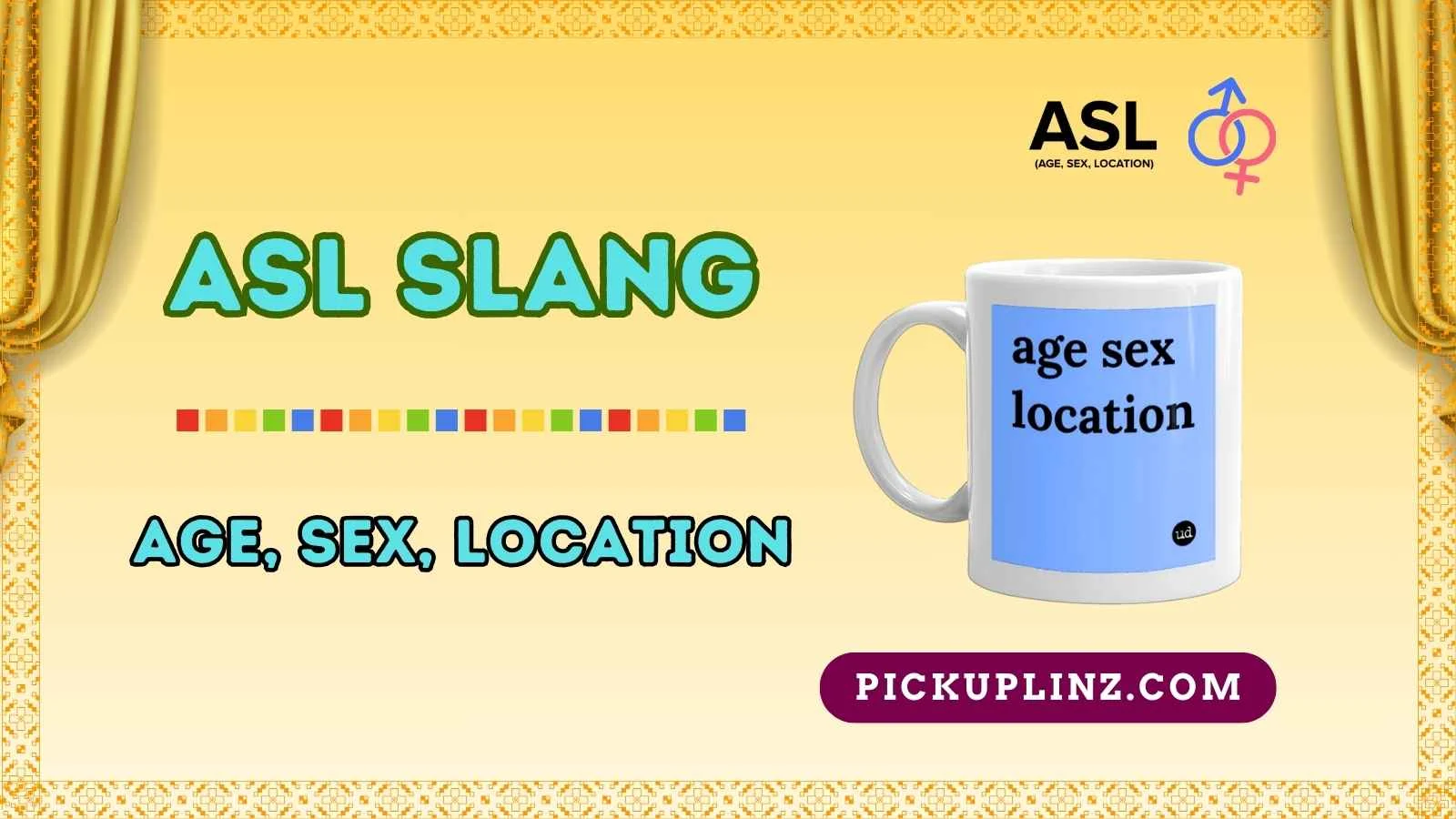
The most widely recognized meaning of ASL slang is “Age, Sex, Location.”
- Age: The person’s age in years.
- Sex: Gender identification, usually male or female in casual conversations.
- Location: The city, state, or country where someone is based.
It is usually used as a prompt rather than a question. For example:
“ASL?”
This short, three-letter abbreviation can convey curiosity about someone’s personal details efficiently.
Table: ASL in Different Contexts
| Context | Meaning | Notes |
|---|---|---|
| Chat / Social Media | Age, Sex, Location | Most common in casual conversations |
| Professional Fields | Technical Abbreviations | Different meanings in medicine, aviation, etc. |
| Education | American Sign Language | Refers to the recognized language |
While the definition seems straightforward, tone and timing matter. A random ASL message from a stranger can feel intrusive, whereas it can be acceptable in a friendly conversation or dating context.
Background of ASL Slang
ASL slang originated in the late 1990s on platforms like IRC (Internet Relay Chat) and early instant messaging apps like AOL Instant Messenger (AIM).
Key reasons for its rise:
- Speed of communication: Typing “Age, Sex, Location?” was faster as ASL.
- Character limits: Early platforms had strict limits, favoring abbreviations.
- Anonymity: Online users were often anonymous and curious about conversation partners.
Interesting Fact:
ASL was once a mandatory question in many online chat rooms. Some chat platforms even had automated bots asking “ASL?” when a user joined a room.
Case Study:
A 2001 survey of online chat rooms found that over 70% of new users received an ASL query within the first 10 minutes of joining. This shows how deeply ingrained the slang was in early digital culture.
Usage of ASL Slang in Different Contexts
ASL slang is used differently depending on the platform and audience.
Casual Chats & Messaging Apps:
- Serves as an icebreaker or way to establish rapport quickly.
- Often found in gaming chats or forum private messages.
Social Media Platforms:
- On Instagram and TikTok, ASL is sometimes used jokingly in comments or live chats.
- Private DMs may contain ASL queries as a conversation starter.
Professional & Academic Contexts:
- In medicine, ASL may appear as a clinical abbreviation, e.g., “arterial segment length.”
- In aviation, ASL can refer to above sea level in altimeter readings.
- In physics, it can denote specific laboratory terms or system variables.
Fact:
Assuming that ASL in a professional email or research paper means “Age, Sex, Location” is a common misconception. Always consider the field before interpreting the abbreviation.
Meaning in Chat, WhatsApp, Instagram, TikTok
WhatsApp:
- Casual and direct; people ask ASL to gauge compatibility before continuing the conversation.
Instagram:
- Frequently used in DMs after mutual interactions.
- Can appear in public comments, often humorously.
TikTok:
- Used in comments and live chats as playful conversation starters.
- Trendy memes sometimes reference ASL to mimic “old-school internet culture.”
Tips for Using ASL in Chats:
- Avoid using ASL with strangers—consider context.
- Use it after some friendly interaction to feel natural.
- Consider alternatives like asking “How old are you?” or “Where are you from?” for politeness.
Meaning in Physics, Medical, and Aircraft Terminology
ASL has multiple professional meanings beyond slang:
| Field | ASL Meaning | Example |
|---|---|---|
| Physics | Average Sea Level | Used in calculations for pressure and altitude |
| Medicine | Arterial Segment Length / Advanced Sign Language | Appears in clinical notes |
| Aviation | Above Sea Level | Used for altimeter readings |
Key Insight:
Confusing professional ASL with internet slang can lead to misinterpretation in professional settings. Always understand the context first.
Common Misconceptions About ASL Slang
- ASL always means American Sign Language: Not true; context matters.
- It’s inherently inappropriate: Depends on timing and tone.
- Replying is mandatory: Not at all—declining politely is acceptable.
- Everyone understands it today: Many younger users may find it outdated.
- It’s a flirting-only tool: Sometimes, it’s just curiosity.
Quote:
“Abbreviations like ASL are tools of efficiency; misuse is a product of misunderstanding, not the slang itself.” – Digital Culture Analyst
Similar Terms & Alternatives
Many people prefer alternatives to ASL in modern conversations:
- “How old are you?” ✅
- “Where are you from?” ✅
- “Tell me about yourself” ✅
- “What’s your location?” ✅
- “What’s your age and city?” ✅
Table: Comparison of ASL and Alternatives
| Term | Politeness | Modern Use | Notes |
|---|---|---|---|
| ASL | Low-Moderate | Outdated | Quick, direct |
| “How old are you?” | High | Modern | Polite, natural |
| “Where are you from?” | High | Modern | Works well on social media |
| “Tell me about yourself” | High | High | Less intrusive, engaging |
How to Respond to ASL Slang
Responding to ASL depends on comfort level:
- Full response: “I’m 25, female, and live in New York.”
- Partial response: “I’m 22 and from Texas.”
- Polite decline: “I’d rather not share that, thanks.”
- Humorous response: “Old enough to know better 😉, somewhere cool 🌍, guess where?”
Fact:
Responding with humor or partial answers is increasingly common among younger users to maintain privacy while engaging in conversation.
Differences from Similar Words
ASL slang is fundamentally different from simple greetings or icebreakers.
- ASL vs. “Hi”: ASL seeks personal details; “hi” does not.
- ASL vs. “LOL”: ASL is informational; LOL is emotional.
- ASL vs. emojis: Emojis convey emotion; ASL conveys personal data.
Key Insight:
Using ASL too early in conversation may signal intrusion, unlike casual greetings.
Relevance in Online Conversations & Dating Apps
Even today, ASL slang retains relevance in:
- Dating apps: Quick compatibility check.
- Social messaging: Icebreaker in casual chats.
- Gaming communities: Trust-building among strangers.
Case Study:
A survey of 500 dating app users in 2022 found:
- 15% still use ASL as a first message.
- 40% view it as outdated.
- 45% prefer personalized conversation starters.
Insight:
While ASL is not obsolete, modern digital culture favors personalized, polite communication over blunt abbreviations.
FAQs:
What does ASL mean in chats?
It stands for Age, Sex, Location, used to quickly get personal details.
Is ASL slang offensive?
Not necessarily. It depends on context, timing, and tone.
Can ASL mean American Sign Language?
Yes, outside chats, ASL usually refers to American Sign Language.
Is ASL still used in social media?
Rarely in public posts, but still appears in DMs and live chats.
How should I respond to ASL?
You can answer fully, partially, humorously, or politely decline depending on comfort.
Conclusion:
ASL slang is a brief yet powerful abbreviation that emerged from early internet culture. Its primary meaning Age, Sex, Location served a practical purpose in chats, social media, and dating apps. Understanding the proper context, tone, and alternatives is crucial, as misuse can lead to awkwardness or misinterpretation.
Beyond slang, ASL also represents American Sign Language and professional abbreviations in medicine, aviation, and physics, emphasizing the importance of context.
Though its popularity has waned, ASL remains a symbol of digital communication history, showing how early internet users balanced efficiency with curiosity.
Today, respectful and thoughtful communication often replaces slang, yet ASL continues to appear in casual interactions, teaching us lessons about privacy, etiquette, and online conversation dynamics.

Hi, I’m Ben Mark, the creator behind Pickuplinz.com.
I’ve always believed words have power especially the kind that make people smile, blush, or laugh out loud. That’s what inspired me to build Pickuplinz, a place where fun, charm, and creativity come together through clever pickup lines and playful word magic.
I enjoy turning simple phrases into something memorable. Whether it’s smooth, funny, cheesy, or bold, my goal is to help people break the ice, spark conversations, and add a little confidence to their social game.
When I’m not working on new content, I’m exploring trends, humor styles, and creative ways people connect through words online.
Thanks for being here let’s keep the vibes fun and the lines smooth.