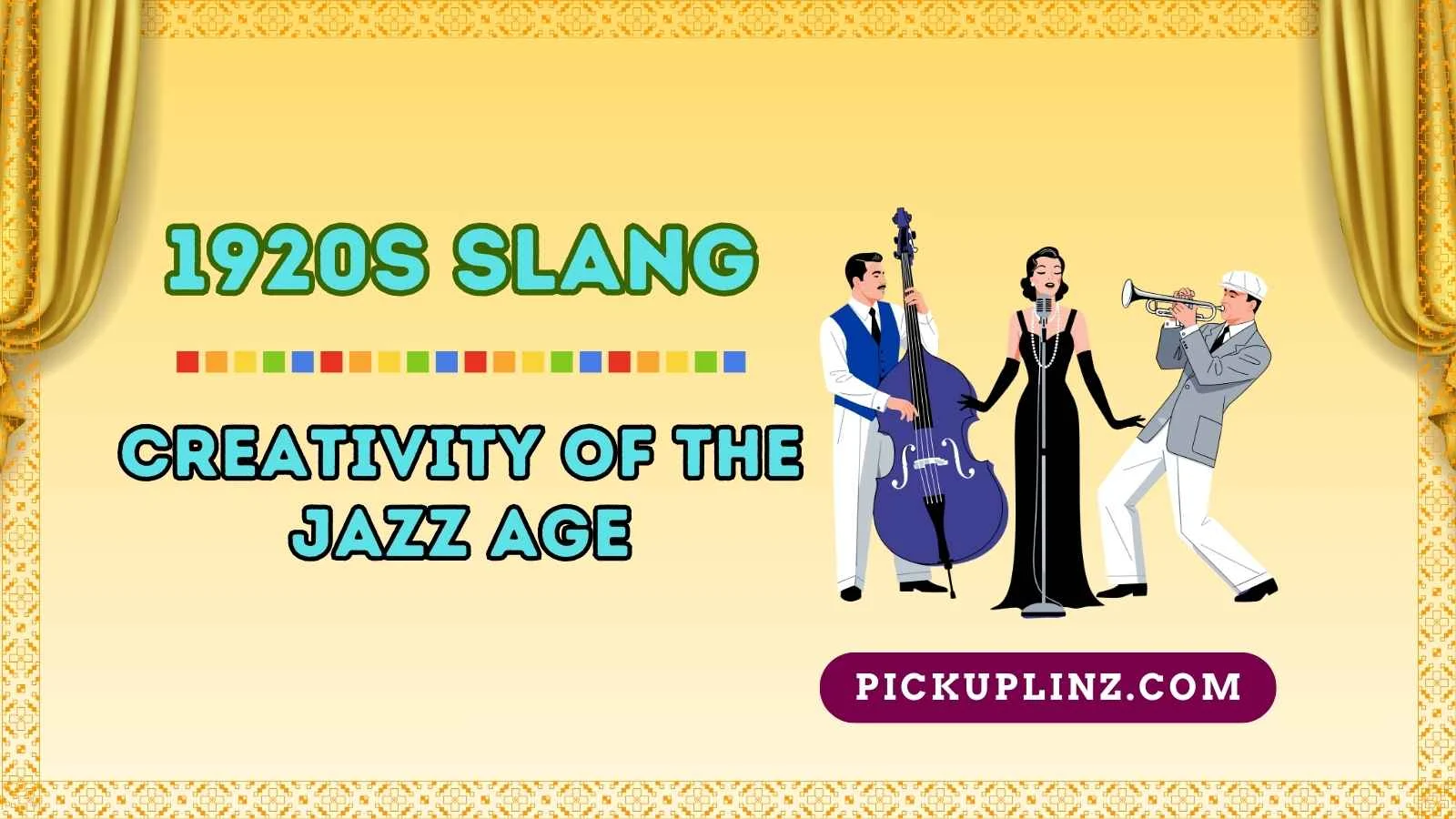
The term 1920s slang refers to informal words and phrases that became popular during the Roaring Twenties a decade marked by jazz music, flappers, speakeasies, economic growth, and dramatic social change.
Language during this time reflected freedom, rebellion, humor, and creativity. Instead of stiff formal expressions, people embraced playful metaphors and catchy phrases to describe everyday life.
People search for 1920s slang today for many reasons. Writers want authenticity in historical fiction. Content creators use it to add vintage charm. Educators explore it to explain cultural change. Even social media users and daters borrow these phrases to sound witty and unique.
Beyond entertainment, slang provides insight into how people thought, socialized, and expressed identity in a rapidly modernizing world.
Understanding 1920s slang isn’t just about old words it’s about understanding a mindset. This article dives deep into that world, breaking down meanings, contexts, misconceptions, and relevance in a clear, engaging, and practical way.
Meaning & Definition of 1920s Slang
1920s slang is a collection of informal, nonstandard expressions widely used during the 1920s, especially in urban America.
These phrases often carried meanings far removed from their literal words. Creativity mattered more than logic, and humor mattered more than grammar.
Key characteristics of 1920s slang
- Metaphorical – Used animals, objects, and exaggerated imagery
- Playful tone – Often humorous, upbeat, or sarcastic
- Social signaling – Indicated belonging to certain groups (jazz fans, flappers, partygoers)
- Short-lived but impactful – Some phrases faded quickly, others became timeless
Simple definition
1920s slang is expressive, informal language that reflected the energy, rebellion, and creativity of the Jazz Age.
Examples and meanings
| 1920s Slang Term | Meaning |
|---|---|
| The bee’s knees | Something excellent |
| Cat’s pajamas | Highly impressive |
| Giggle water | Alcohol |
| Big cheese | Important person |
| Doll | Attractive woman |
These phrases weren’t random. They reflected optimism, excess, and a desire to break from tradition.
Background: How 1920s Slang Was Born
The explosion of 1920s slang didn’t happen by accident. It was shaped by powerful social, economic, and cultural forces.
Post-World War I mindset
After World War I, people wanted joy, freedom, and excitement. The strict social rules of the past felt outdated. Language loosened as lifestyles changed.
Jazz culture and nightlife
Jazz music encouraged improvisation and individuality. Slang mirrored this rhythm and energy. Dance halls, clubs, and speakeasies became breeding grounds for new expressions.
Prohibition and coded language
Alcohol was illegal from 1920 to 1933. To avoid trouble, people used slang as coded speech.
- “Giggle water” instead of alcohol
- “Blind pig” instead of illegal bar
Media influence
- Radio spread slang nationwide
- Silent films and early talkies popularized phrases
- Newspapers and magazines repeated catchy expressions
Urbanization and immigration
Cities mixed cultures, accents, and languages. This blending created fresh vocabulary that felt modern and rebellious.
Usage of 1920s Slang in Different Contexts
Although rooted in the past, 1920s slang still appears in various modern contexts—each with a slightly different purpose.
Everyday chat and casual conversation
People use 1920s slang playfully, often to:
- Sound humorous
- Add personality
- Stand out in conversation
Example:
“That party was the cat’s pajamas!”
Social media content
Creators use 1920s slang to build a retro aesthetic.
- Instagram captions
- TikTok skits
- Vintage-themed reels
It works especially well with:
- Old photos
- Jazz music
- Black-and-white filters
Professional and creative fields
1920s slang appears in:
- Historical novels
- Film and TV scripts
- Fashion branding
- Theater productions
In professional communication, it’s mostly avoided unless used stylistically or for storytelling.
Meaning of 1920s Slang in Chat, WhatsApp, Instagram, and TikTok
In modern digital communication, the meaning of 1920s slang remains mostly unchanged—but the intent is different.
In private chats (WhatsApp, Messenger)
- Used jokingly or ironically
- Signals creativity or humor
Example:
“You handled that like a real big cheese 😄”
On Instagram
- Adds charm and uniqueness
- Works well for captions
Example:
“Feeling like the bee’s knees today 🐝✨”
On TikTok
- Used in skits, education, and storytelling
- Often paired with vintage music or costumes
Creators use 1920s slang to:
- Entertain
- Educate
- Stand out from trends
Meaning in Physics, Medical, and Aircraft Terminology
Despite its popularity in culture, 1920s slang has no technical meaning in scientific or professional terminology.
Why slang doesn’t apply
- Physics, medicine, and aviation require precision
- Informal language could cause confusion or danger
- Technical terms are standardized and universal
Important clarification
Some technical words existed in the 1920s, but they were not slang. Any overlap is purely coincidental.
Common Misconceptions About 1920s Slang
Many myths surround 1920s slang. Let’s clear them up.
Misconception: Everyone spoke entirely in slang
Reality:
Slang was mixed with standard English. People didn’t speak like cartoons.
Misconception: All phrases were silly
Reality:
Many phrases were clever metaphors reflecting social values and emotions.
Misconception: Slang was the same everywhere
Reality:
Usage varied by:
- Region
- Class
- Social group
Misconception: It’s completely outdated
Reality:
Many modern expressions evolved from or were inspired by 1920s slang.
Similar Terms & Alternatives to 1920s Slang
If you’re exploring language styles similar to 1920s slang, here are useful alternatives.
Related language styles
- Vintage slang
- Old-fashioned expressions
- Jazz Age vocabulary
- Retro language
- Classic American slang
Modern alternatives
| Purpose | 1920s Slang | Modern Equivalent |
|---|---|---|
| Compliment | Bee’s knees | Awesome |
| Cool person | Big cheese | Influencer |
| Fun time | Hotsy-totsy | Lit |
Both serve the same purpose: expressing emotion and identity.
How to Respond When Someone Uses 1920s Slang
Knowing how to respond keeps conversations smooth and fun.
Match the tone
If someone says:
“You’re the cat’s pajamas!”
You can reply:
“Why thank you, you’re the bee’s knees!”
Ask playfully if unsure
“That’s a new one—what does it mean?”
In professional settings
Acknowledge it with a smile, but keep responses clear and respectful.
Differences Between 1920s Slang and Similar Words
1920s slang stands apart from modern slang in several ways.
Key differences
- Imagery-based vs. tech-based
- Longer phrases vs. abbreviations
- Playful metaphors vs. direct expressions
Comparison table
| Feature | 1920s Slang | Modern Slang |
|---|---|---|
| Source | Culture & jazz | Internet & tech |
| Style | Metaphorical | Abbreviated |
| Tone | Whimsical | Fast-paced |
| Lifespan | Longer | Short-lived |
Relevance of 1920s Slang in Online Conversations & Dating Apps
Surprisingly, 1920s slang thrives in modern digital spaces.
Why it works online
- Unique and memorable
- Shows creativity
- Breaks monotony
Dating apps
Using 1920s slang can make profiles stand out.
Example bio line:
“Looking for someone who’s the cat’s pajamas.”
This suggests:
- Humor
- Confidence
- Personality
Online communities
Vintage lovers, writers, and creators often bond over shared slang knowledge.
Case Study: Why Vintage Slang Performs Well on Social Media
Scenario:
A content creator posts two captions for similar photos.
- Caption A: “This outfit looks great.”
- Caption B: “This outfit is the cat’s pajamas.”
Result:
Caption B receives:
- Higher engagement
- More comments
- Better memorability
Reason:
Vintage slang triggers curiosity and emotional response.
Famous Quotes Featuring 1920s Slang
“Life is too short to be anything but hotsy-totsy.”
“You’re either the bee’s knees or you’re not.”
These phrases captured confidence and optimism—values still admired today.
FAQs:
What is the most popular 1920s slang phrase?
The most popular phrase is “the bee’s knees,” meaning something excellent or impressive.
Is 1920s slang still used today?
Yes, mostly for humor, nostalgia, creative writing, and social media expression.
Did slang originate in the 1920s?
No, slang existed earlier, but the 1920s greatly expanded and popularized it.
Can 1920s slang be used professionally?
Only in creative, historical, or branding contexts—not formal communication.
Why does 1920s slang sound playful?
Because it relied on metaphors, exaggeration, and rhythm rather than literal meaning.
Conclusion: Why 1920s Slang Still Matters Today
1920s slang is more than a collection of quirky phrases it’s a linguistic snapshot of a generation that embraced freedom, creativity, and cultural change.
These expressions captured emotion, rebellion, and joy in ways that still resonate today. While not used in everyday speech, they thrive in literature, social media, dating apps, and creative storytelling.
Understanding 1920s slang helps us appreciate how language evolves with society. It also reminds us that communication isn’t just about clarity it’s about personality, connection, and fun. Whether you’re a writer, creator, or language lover, exploring this slang adds depth and color to your expression.

My name is Bravo Allen, and I am driven by a strong interest in communication, creativity, and meaningful engagement. I believe that clear ideas and thoughtful expression have the power to inform, inspire, and connect people across different backgrounds.
Throughout my journey, I have focused on personal growth, continuous learning, and developing skills that allow me to present information in a clear and impactful way. I value professionalism, consistency, and integrity in every project I take on. My approach combines creativity with purpose, ensuring that everything I work on is both engaging and valuable.
I am particularly interested in how language, ideas, and digital platforms shape the way people interact and share knowledge today. This perspective motivates me to keep improving, adapting, and contributing in ways that make a positive difference.
My goal is to build work that reflects quality, reliability, and thoughtful communication.